

Summarize This Post With
This Page Covers :
-
Temperature of Dry Ice in Fahrenheit
-
Freezing Behavior of Dry Ice
-
Dry Ice Melting Point
-
Sublimation Rate of Dry Ice at Room Temperature
-
Dry Ice Chemical Name
-
Is Dry Ice Dangerous
-
What Is Dry Ice Used For
-
Nitrogen and Dry Ice Difference
-
Where to Buy Dry Ice
-
How to Make Dry Ice
-
Why Dry Ice Feels Extremely Cold
-
How Long Does Dry Ice Lasts
-
Safety Tips for Using Dry Ice
-
FAQs:
-
What temperature is dry ice in degrees Celsius?
-
What is the maximum temperature of dry ice?
-
Is dry ice the coldest ice?
-
Can dry ice last 48 hours?
-
Is dry ice 100 percent carbon dioxide?
-
Can we touch dry ice?
-
Will dry ice melt in water?
-
How long will dry ice last in a freezer?
-
Conclusion
Dry ice often appears harmless, but its behavior can create confusion for many people. Some see a thick, white fog come out from the boxes, while others experience sudden pain after touching it for a moment. These situations usually happen because most people treat dry ice like normal ice.
This mistake leads to skin burns, damaged containers, and breathing discomfort. The biggest reason behind all these issues is the extreme temperature of dry ice, which works very differently from ordinary frozen water.
People search online because they want clear answers. They want to know how cold dry ice really is, why it does not melt, and whether it is dangerous. This article explains every important detail in a simple and professional way so you can safely use dry ice without fear or confusion.
What Is Dry Ice
Dry ice is the solid form of carbon dioxide gas. Carbon dioxide exists naturally in the air, but when it is compressed and cooled under controlled conditions, it becomes a solid. This solid form contains no water, which is why it always stays dry.
When exposed to normal air, it does not turn into a liquid but changes directly into a gas. This special behavior makes dry ice unique among cooling materials and also explains why it must be handled differently from regular ice.
Temperature of Dry Ice
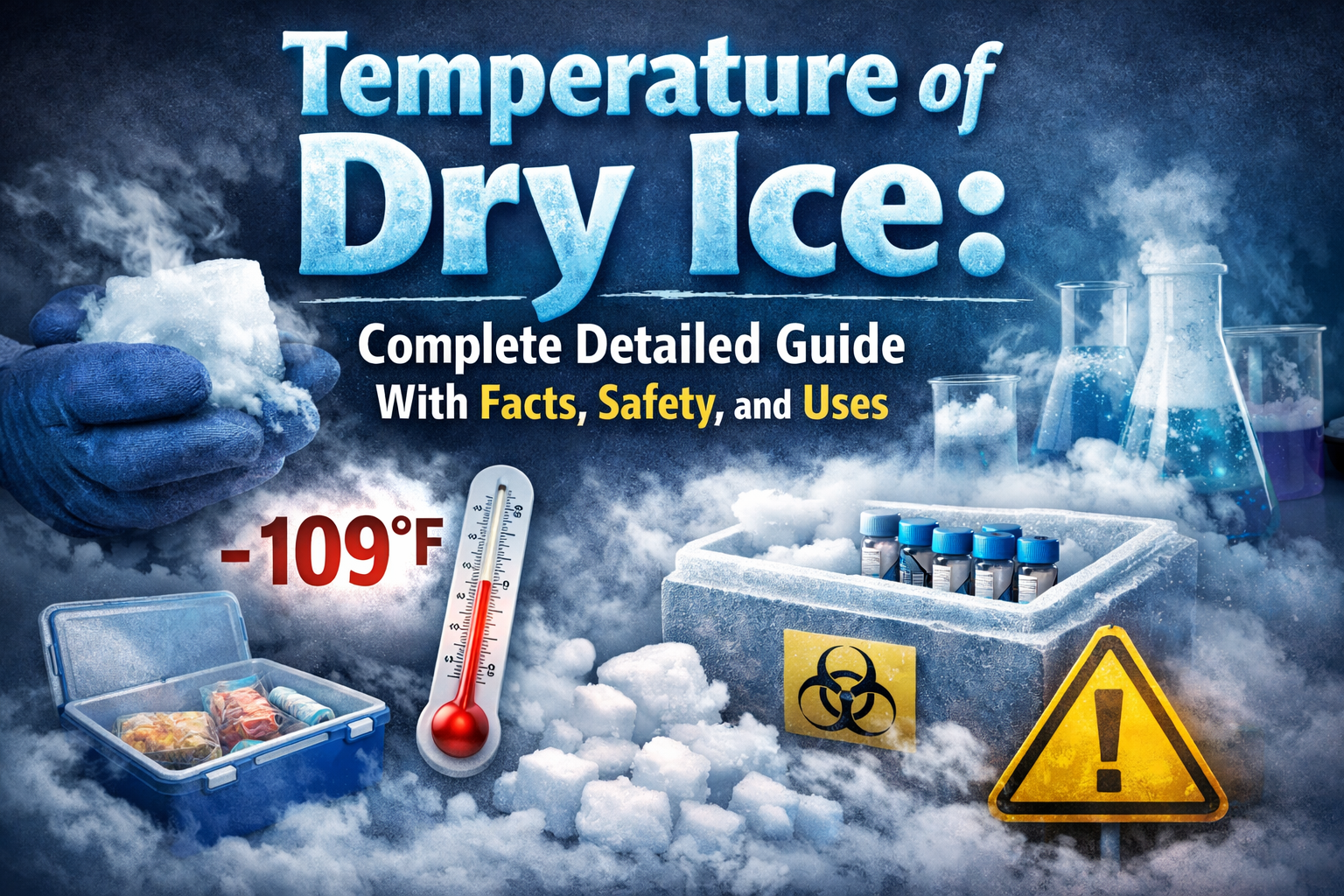
The temperature of dry ice remains extremely low compared to everyday cooling systems. Dry ice stays at minus seventy eight point five degrees Celsius, which equals minus one hundred nine degrees Fahrenheit. This temperature does not rise slowly. Dry ice maintains this level until it fully converts into gas.
Because of this constant extreme cold, even small pieces can freeze surfaces quickly and cause instant skin damage if touched directly.
Average Temperature of Dry Ice
The average temperature of dry ice remains almost unchanged throughout its life. Unlike water ice, which becomes warmer as it melts, dry ice keeps its low temperature from beginning to end. This stability makes it highly reliable for industries that require consistent cooling.
Medical transport, food shipping, and scientific storage rely on this predictable temperature to protect sensitive materials.
Temperature of Dry Ice in Fahrenheit
Many users prefer Fahrenheit values because household systems use this scale. The temperature of dry ice in Fahrenheit is approximately minus one hundred nine degrees. This makes it far colder than domestic freezers, which normally stay around zero degrees.
This massive difference explains why dry ice can crack plastic containers and instantly freeze metal surfaces.
Freezing Behavior of Dry Ice
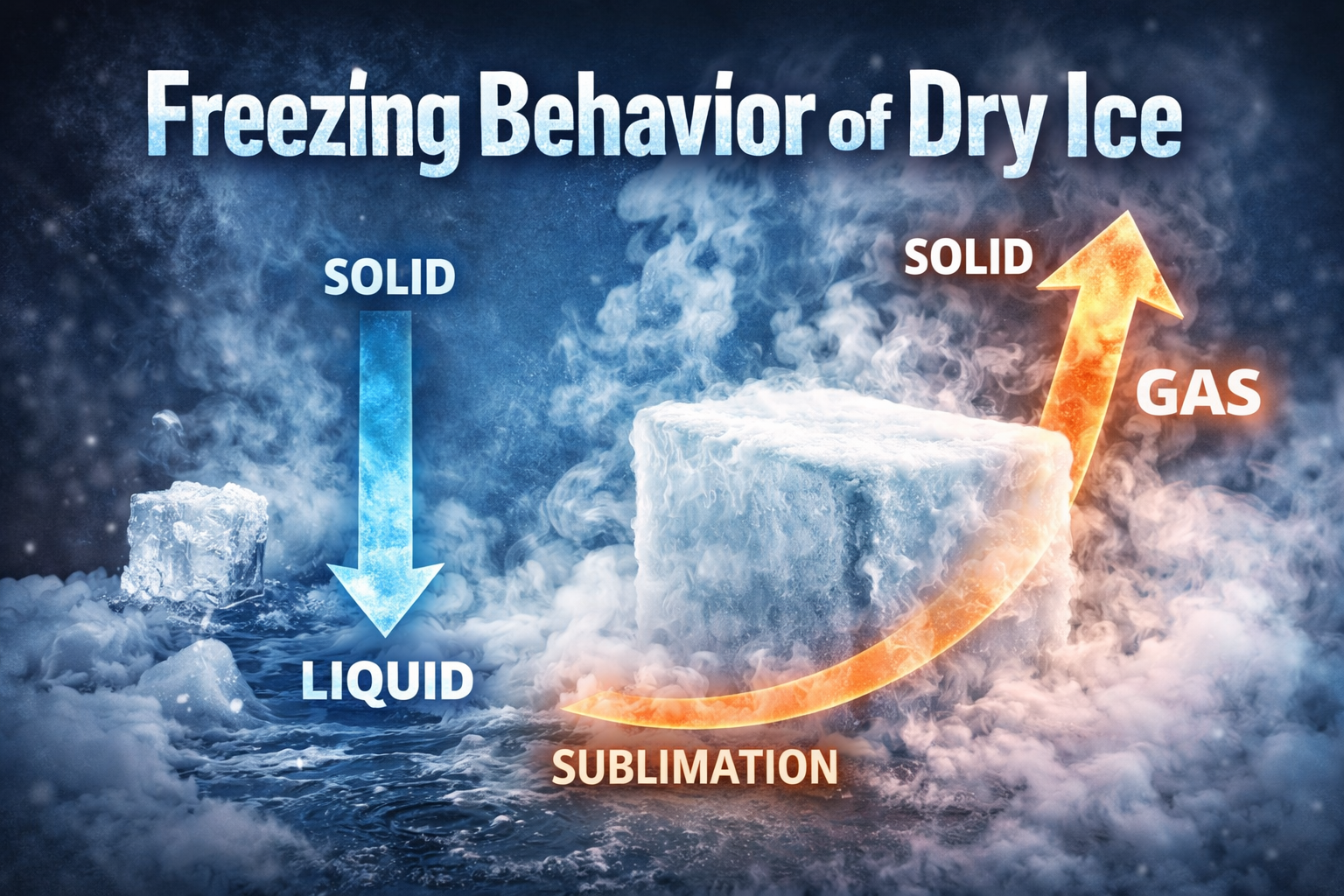
Dry ice does not freeze like water. Carbon dioxide cannot remain liquid under normal air pressure. Because of this, it skips the liquid stage completely. When it warms up, it does not melt but turns directly into gas.
This process is called sublimation, and it defines how dry ice behaves in everyday environments.
Dry Ice Melting Point
Dry ice does not have a traditional melting point. Instead, it has a sublimation temperature of minus seventy eight point five degrees Celsius. Once the surrounding temperature becomes higher than this level, dry ice begins releasing carbon dioxide gas rapidly. This is why dry ice never leaves puddles and always disappears completely.
Sublimation Rate of Dry Ice at Room Temperature
At room temperature, dry ice sublimates quickly. Small pieces may disappear within a few hours, while larger blocks may last longer if insulated. Air movement, surface area, and storage quality all affect the speed.
As carbon dioxide gas escapes, it cools nearby moisture and creates thick white fog, which many people mistake for smoke.
Dry Ice Chemical Name
The chemical name of dry ice is solid carbon dioxide. Its chemical formula is CO2. It contains no additives and no water. Because of this purity dry ice leaves no residue after use. This clean nature makes it ideal for medical and industrial applications.
Is Dry Ice Dangerous
Dry ice can be dangerous if handled without proper care. Direct contact with skin can cause cold burns that damage tissue rapidly. These injuries may not feel painful immediately, but can worsen later.
Carbon dioxide gas can also reduce oxygen levels in closed spaces. Poor ventilation may lead to dizziness, headaches, or fainting. Containers sealed tightly with dry ice may burst due to pressure buildup.
What Is Dry Ice Used For
Dry ice plays an important role in many industries. It is commonly used for frozen food transport, where moisture must be avoided. Hospitals and laboratories use it to preserve vaccines, blood samples, and biological materials.
Entertainment industries use dry ice to create fog effects while industrial sectors use it for cleaning machinery without water or chemicals.
Nitrogen and Dry Ice Difference
Many people confuse dry ice with nitrogen. Dry ice is carbon dioxide, while nitrogen is a different substance. Liquid nitrogen reaches much lower temperatures and requires different safety procedures. Although both are cold materials, they should never be treated as the same.
Where to Buy Dry Ice
Dry ice is usually available from industrial gas suppliers, ice factories, and some large grocery chains. It should always be transported in ventilated containers and never stored in airtight boxes. Trusted suppliers also provide safety instructions, which must be followed carefully.
How to Make Dry Ice
Making dry ice at home is not safe. The process requires high pressure carbon dioxide systems and specialized equipment. Attempting this without professional tools can result in serious injury. Dry ice should always be purchased rather than produced at home.
Why Dry Ice Feels Extremely Cold
Dry ice feels colder than normal ice because it absorbs heat very quickly. When skin touches it, heat transfers instantly from the body to the dry ice. This rapid heat loss freezes skin cells and causes burns. This reaction explains why even brief contact can be harmful.
How Long Does Dry Ice Lasts
Dry ice life depends on storage conditions. In the open air, it may last only a few hours. In insulated containers, it can last close to a full day. Eventually, it always disappears completely without leaving liquid behind.
Safety Tips for Using Dry Ice
Safe handling requires insulated gloves, proper ventilation, and loose containers. Dry ice should never be stored in sealed spaces and should always be kept away from children. Following basic safety rules allows safe and effective use.

FAQs:
What temperature is dry ice in degrees Celsius?
Dry ice stays at minus 78 point five degrees Celsius under normal conditions.
What is the maximum temperature of dry ice?
Dry ice does not warm up gradually. Its maximum temperature remains minus seventy eight degrees Celsius until it turns into a gas.
Is dry ice the coldest ice?
Dry ice is colder than normal water ice, but it is not the coldest substance. Some materials, like liquid nitrogen, are much colder.
Can dry ice last 48 hours?
Dry ice can last close to 48 hours only in a well insulated container with minimal air exposure.
Is dry ice 100 percent carbon dioxide?
Yes, dry ice is made of pure solid carbon dioxide with no water or additives.
Can we touch dry ice?
No, dry ice should never be touched with bare hands because it can cause severe cold burns.
Will dry ice melt in water?
Dry ice does not melt in water. It sinks and rapidly turns into gas while creating fog.
How long will dry ice last in a freezer?
Dry ice will not last in a freezer because the freezer temperature is much warmer than dry ice. It will sublimate quickly and disappear.
Conclusion
The temperature of dry ice defines its power and its risk. At minus one hundred nine degrees Fahrenheit, it stands far colder than normal ice or freezers. This extreme temperature explains why it sublimates instead of melting and why it must be handled carefully.
When used with proper knowledge, dry ice becomes a highly effective cooling solution. When treated casually, it can cause serious harm. Respecting its temperature and behavior is the key to safe and successful use.
Read More:
What is Dry Ice and Why It Matters in Saudi Arabia
What Is Dry Ice Used For in the Modern World of Industrial Gas and Advanced Cooling
Best Dry Ice Blasting Saudi Arabia: Eco Friendly and Efficient Cleaning Solutions
Dry Ice Dangers You Cannot Ignore: Hidden Health Risks and Safe Handling Truths