


Summarize This Post With
This Page Covers :
-
How to store dry ice?
-
How to store dry ice in a freezer?
-
How to store dry ice overnight?
-
How to keep dry ice from melting?
-
How to store dry ice for 24 hours?
-
How to store dry ice in a fridge?
-
How to store dry ice, and how long does it last?
-
How to store dry ice at the correct temperature?
-
Can you store dry ice?
-
Common Mistakes People Make
-
Safety Tips Everyone Must Follow
-
Why Proper Storage Matters?
-
FAQs:
-
How long can you store dry ice for?
-
Is it okay to put dry ice in the freezer?
-
Is it okay to store dry ice in the fridge?
-
How long will 2kg of dry ice last?
-
How to stop dry ice from melting?
-
What are the disadvantages of dry ice?
-
What are three things you should never do with dry ice?
-
How to make dry ice last longer?
-
Can dry ice cool a refrigerator?
-
Conclusion
Dry ice is widely used for food delivery, medical storage, events, and cooling purposes. Many people buy dry ice but face confusion immediately after purchase. The biggest problem starts when they ask one question: how to store dry ice safely.
People often make serious mistakes, such as putting it inside normal containers, closing lids tightly, or placing it in the freezer without safety knowledge. These mistakes can cause gas buildup, damage to appliances, or even health risks.
Another major pain point is time. Dry ice does not melt like normal ice. It turns directly into gas, which makes people panic when it starts disappearing fast. They feel frustrated because they spent money, but the dry ice vanishes sooner than expected.
This guide explains everything clearly in simple language. You will learn where to place dry ice, how long it lasts, what temperature is required, and what should never be done. If you read this article fully, you will never waste dry ice again.
How to store dry ice?
How to store dry ice correctly depends on airflow temperature and insulation. Dry ice must never be sealed completely. It releases carbon dioxide gas constantly and needs space to breathe.
The safest method is to place dry ice in a thick, insulated container with a loose lid. This slows down gas release and keeps the temperature stable. Avoid plastic boxes that can crack. Use foam containers or thick thermal boxes instead.
Dry ice should always stay in a cool, dry area away from direct sunlight. Heat increases sublimation speed, which makes it disappear faster. When storing dry ice, always wear gloves. Bare hands can get frostbite within seconds. This safety rule must never be ignored.
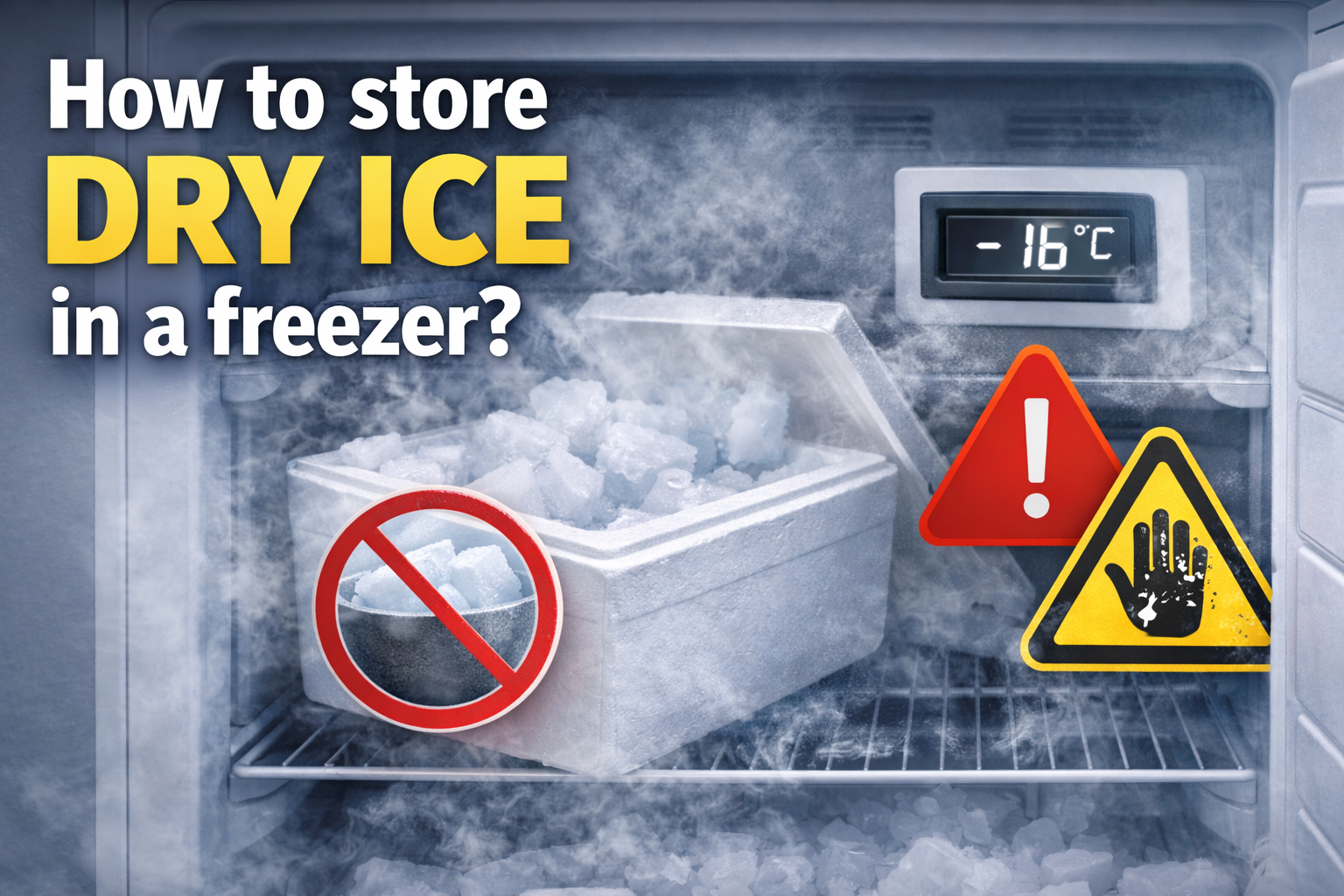
How to store dry ice in a freezer?
Many people believe the freezer is the best place for dry ice, but this is not fully correct. A household freezer is not designed for extremely low temperatures like dry ice.
Dry ice temperature is far lower than freezer temperature. When placed inside the freezer, it can force the thermostat to shut down or damage internal sensors. In some cases, it may cause a freezer malfunction.
If there is no other option and you must place it inside the freezer, then follow one rule. Never close the container tightly. Keep the lid slightly open to allow gas escape. Place dry ice on the top shelf only and never near freezer walls. This reduces direct contact and limits damage risk. Freezer storage is temporary only and not recommended for long durations.
How to store dry ice overnight?
Overnight storage is very common, especially for events and food transport. The biggest mistake people make is leaving dry ice uncovered. To store dry ice overnight, you must use an insulated foam box. Wrap the dry ice loosely in newspaper or thick paper. Do not use airtight wrapping.
Place the container in a ventilated area such as a garage or balcony. Keep it away from bedrooms and closed rooms. Carbon dioxide gas can reduce oxygen levels in small spaces. If stored properly overnight, dry ice usually remains solid with minimal loss. Temperature stability plays the most important role here.
How to keep dry ice from melting?
Dry ice does not melt into water, but it turns into a gas. This process becomes faster when exposed to warmth. To slow down this process, keep dry ice insulated at all times. Use thick foam boxes and avoid opening the lid frequently. Every time the lid opens, warm air enters and speeds up gas release.
Store dry ice in a shaded area. Never place it near ovens, heaters or sunlight. Even room heat can reduce its life quickly. Do not break dry ice into smaller pieces unless necessary. Larger blocks last longer because surface exposure is lower.
How to store dry ice for 24 hours?
Storing dry ice for 24 hours is possible if done correctly. The best solution is a high quality insulated container. Place thick paper at the bottom of the container, then place the dry ice block. Cover it lightly with more paper. Leave the lid slightly loose.
Do not store it in refrigerators. A normal fridge cannot handle such low temperatures and may get damaged. When stored properly, dry ice can easily last up to 24 hours with controlled loss. Expect some reduction but not complete disappearance.

How to store dry ice in a fridge?
Storing dry ice in a fridge is not recommended. A refrigerator operates at a much higher temperature compared to dry ice. When placed inside a fridge, dry ice can cause plastic cracking and sensor failure. It can also push carbon dioxide gas into the food compartment, which is unsafe.
If unavoidable, place dry ice inside a thick insulated box first and then place that box inside the fridge with the door slightly opened for airflow. This method should only be used for emergencies and not as a routine practice.
How to store dry ice, and how long does it last?
Dry ice storage and lifespan depend on three factors: insulation temperature and airflow. In the open air, dry ice disappears very fast, sometimes within hours. In insulated containers, it lasts much longer.
On average, dry ice lasts between 18 and 24 hours in proper storage. Large blocks may survive longer. Smaller pieces disappear faster. Opening containers repeatedly shortens their life. Keep it closed as much as possible.
How to store dry ice at the correct temperature?
Dry ice stays at an extremely low temperature, which is far below the freezing point. Because of this, it must never touch skin directly. The ideal storage temperature is not something you control directly. Instead, you focus on insulation.
Foam boxes naturally slow temperature transfer. This helps dry ice remain stable without external cooling. Do not try to cool dry ice further. It does not require electricity or refrigeration.
Can you store dry ice?
Yes, you can store dry ice safely if you follow the correct methods. The key is never sealing it completely and never storing it in living spaces. Always use ventilated areas. Carbon dioxide gas is heavier than air and can collect in closed rooms.
Never place dry ice inside airtight jars, bottles or metal containers. Pressure buildup can cause an explosion. With proper care, dry ice storage becomes safe and effective for short term use.
Common Mistakes People Make
Many people assume dry ice behaves like normal ice. This wrong belief causes accidents and losses. Another common mistake is placing it in sealed coolers. While insulation is good, sealing is dangerous.
Some people try to store dry ice in plastic bags. These bags crack due to extreme cold. Others place it near food directly, which can contaminate items with gas exposure. Avoiding these mistakes improves safety and efficiency.
Safety Tips Everyone Must Follow
- Always wear gloves when handling dry ice.
- Never touch it directly.
- Do not inhale gas closely.
- Keep away from children and pets.
- Store in ventilated spaces only.
These rules are simple but extremely important.
Why Proper Storage Matters?
Improper storage causes fast loss, which wastes money. It can also damage appliances and pose health risks. Correct storage saves cost, improves performance and keeps your environment safe. Whether you use dry ice for shipping medical supplies or events, proper handling always gives better results.

FAQs:
How long can you store dry ice for?
Dry ice can usually be stored for about 18 to 24 hours if kept in a well insulated container. Its lifespan depends on temperature, airflow and container quality. Larger blocks last longer than small pieces.
Is it okay to put dry ice in the freezer?
Putting dry ice in a freezer is not recommended. Dry ice is much colder than freezer temperature and may damage sensors or internal parts. If unavoidable, it should only be placed inside an insulated box with airflow.
Is it okay to store dry ice in the fridge?
Storing dry ice in a fridge is unsafe. It can crack plastic parts and release carbon dioxide gas into the closed space. This may damage the appliance and create safety risks.
How long will 2kg of dry ice last?
Two kilograms of dry ice usually lasts between 20 and 24 hours when stored properly in an insulated container. Exposure to heat or frequent opening can reduce its life quickly.
How to stop dry ice from melting?
Dry ice does not melt into liquid but turns into a gas. To slow this process, keep it in a thick insulated box, avoid opening the lid often and store it away from heat or sunlight.
What are the disadvantages of dry ice?
Dry ice can cause skin burns if touched directly. It releases carbon dioxide gas, which can be harmful in closed areas. It also disappears quickly and requires careful handling and proper storage.
What are three things you should never do with dry ice?
You should never touch dry ice with your bare hands. You should never store it in sealed containers. You should never place it in closed rooms without ventilation.
How to make dry ice last longer?
To make dry ice last longer, store it in a thick foam container, keep the lid slightly open and place it in a cool, shaded area. Avoid breaking it into small pieces.
Can dry ice cool a refrigerator?
Dry ice can temporarily lower the temperature inside a refrigerator, but it is not recommended. It may damage internal components and create unsafe gas buildup inside the closed space.
Conclusion
How to store dry ice correctly is not complicated, but it requires awareness. When people ignore basic rules, dry ice disappears quickly or becomes dangerous. By using insulated containers, maintaining airflow, avoiding sealed storage and keeping it away from heat, you can easily store dry ice safely.
If you follow the steps explained in this guide, your dry ice will last longer, perform better and remain safe to handle. Correct knowledge removes fear and confusion. Now you can use dry ice confidently without wasting time, money or safety.
Read More:
What is Dry Ice and Why It Matters in Saudi Arabia
What Is Dry Ice Used For in the Modern World of Industrial Gas and Advanced Cooling
Best Dry Ice Blasting Saudi Arabia: Eco Friendly and Efficient Cleaning Solutions
Dry Ice Dangers You Cannot Ignore: Hidden Health Risks and Safe Handling Truths