

Summarize This Post With
This Page Covers :
-
What Are Dry Ice Uses in Building Maintenance?
-
Why Are Dry Ice Uses in Building Maintenance Gaining Popularity?
-
How Does Dry Ice Cleaning Actually Work?
-
Where Can Dry Ice Be Used Inside Commercial Buildings?
-
Is Dry Ice Cleaning Safe for Building Materials?
-
Can Dry Ice Help with Mold and Water Damage Restoration?
-
How Does Dry Ice Improve Industrial Facility Maintenance?
-
Is Dry Ice Cleaning Environmentally Responsible?
-
How Much Does Dry Ice Cleaning Cost Compared to Traditional Methods?
-
Who Should Hire Professional Dry Ice Cleaning Services?
-
What Should Property Owners Know Before Choosing This Method?
-
FAQs:
-
What is dry ice used for in construction?
-
What materials can be cleaned with dry ice?
-
What is the main purpose of dry ice?
-
Is dry ice bad for concrete?
-
How long will dry ice keep stuff cold?
-
What are the benefits of dry ice cleaning?
-
When should dry ice be used?
-
Conclusion: Why Should You Consider Dry Ice Uses in Building Maintenance for Your Property?
Have you ever faced stubborn mold, grease, smoke damage, or industrial dirt in your building and felt frustrated because normal cleaning methods just do not work? Many property owners struggle with downtime, high labor costs, chemical exposure, and surface damage caused by traditional cleaning systems.
You want a method that is safe, fast, and powerful without harming your building structure. This is where Dry Ice Uses in Building Maintenance change the game. This advanced cleaning solution solves deep cleaning problems while protecting surfaces, reducing risk, and improving overall property value.
In this detailed guide, you will learn exactly how it works, where it is used, and why professionals trust it for serious maintenance tasks.
What Are Dry Ice Uses in Building Maintenance?
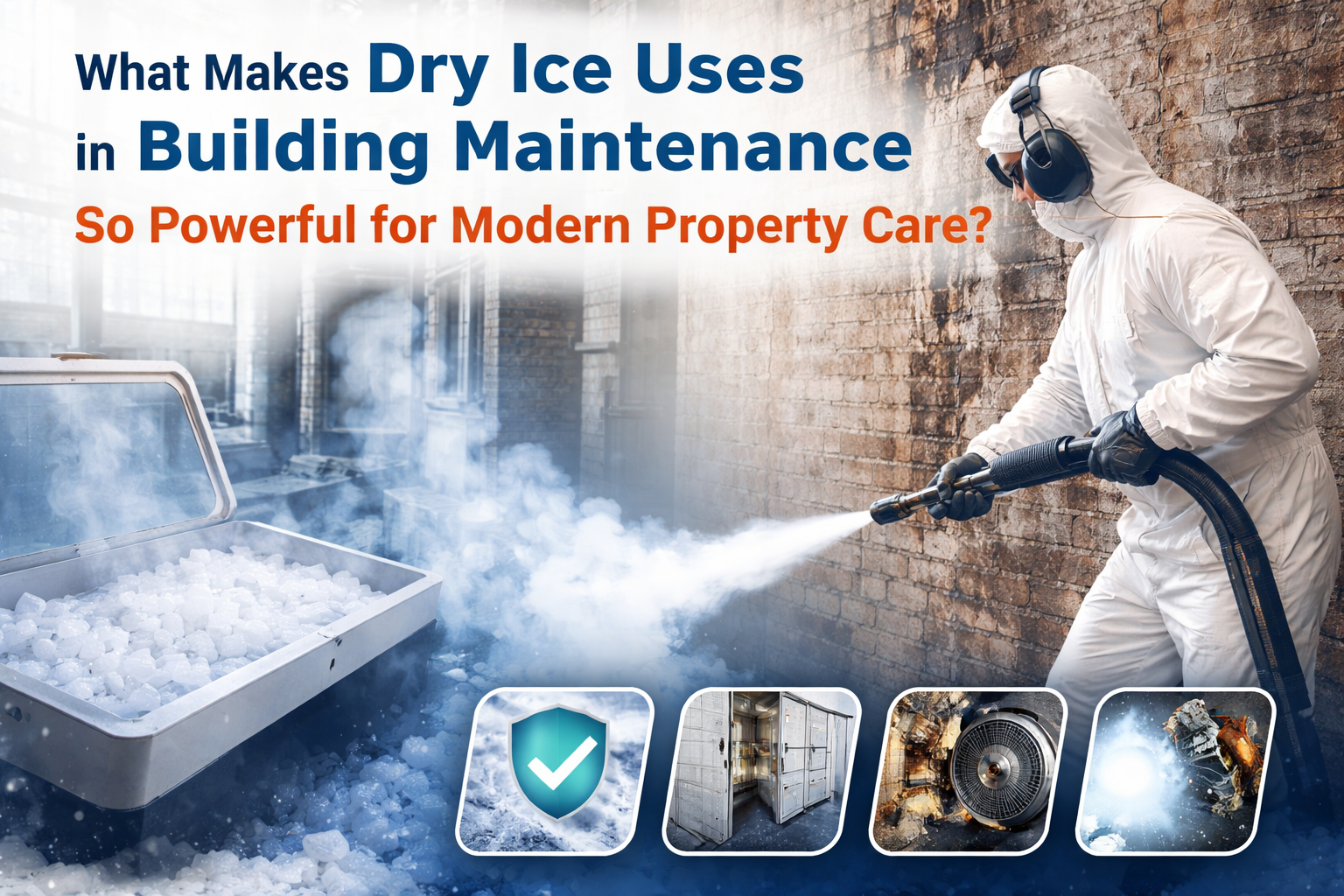
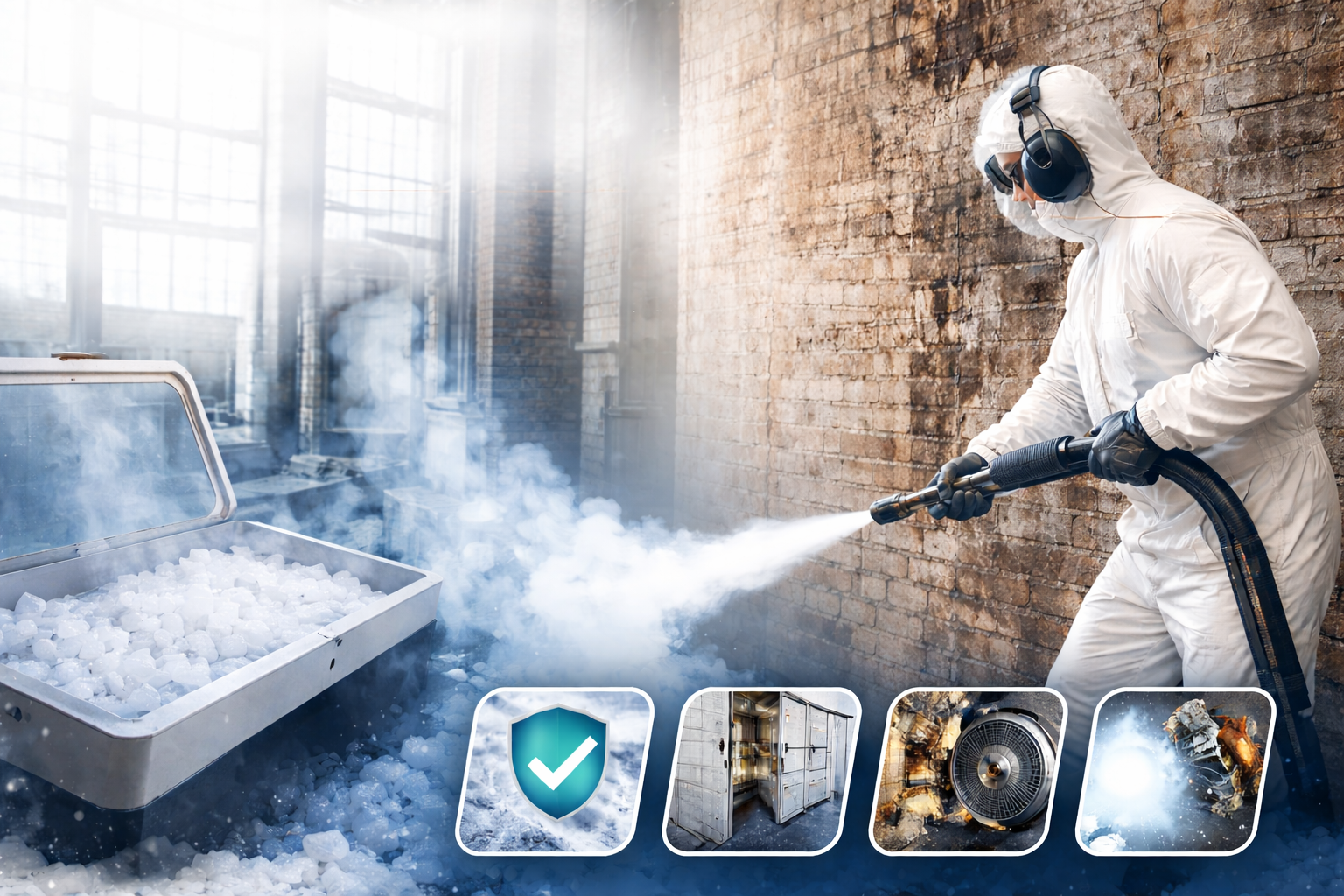
Dry Ice Uses in Building Maintenance refer to the process of cleaning surfaces using solid carbon dioxide pellets. Professionals blast small dry ice particles at high speed onto dirty surfaces. When these pellets hit the surface, they instantly turn into gas. This rapid expansion lifts dirt, grease, mold, paint, and contaminants without damaging the base material.
Unlike water blasting or chemical cleaning, this method does not leave moisture behind. It also does not create secondary waste because the dry ice turns into gas and disappears. That means no residue, no added cleanup, and minimal disruption.
Facility managers, contractors, and restoration experts use this method in commercial buildings, hospitals, factories, schools, and residential properties. It is especially useful when sensitive equipment or delicate materials require careful cleaning.
Why Are Dry Ice Uses in Building Maintenance Gaining Popularity?
Dry Ice Uses in Building Maintenance are becoming more popular because property owners demand safer and more efficient cleaning systems. Traditional cleaning methods often involve water, harsh chemicals, and heavy scrubbing. These approaches can damage surfaces, increase labor time, and create safety risks.
Dry ice cleaning offers several advantages:
- It is non toxic and does not use harmful chemicals.
- It reduces downtime because surfaces dry instantly.
- It protects delicate materials.
- It improves cleaning precision in hard to reach areas.
- It lowers long term maintenance costs.
Businesses also prefer this method because it aligns with modern safety and environmental standards. Many companies now focus on sustainable practices, and dry ice cleaning supports that goal.
How Does Dry Ice Cleaning Actually Work?
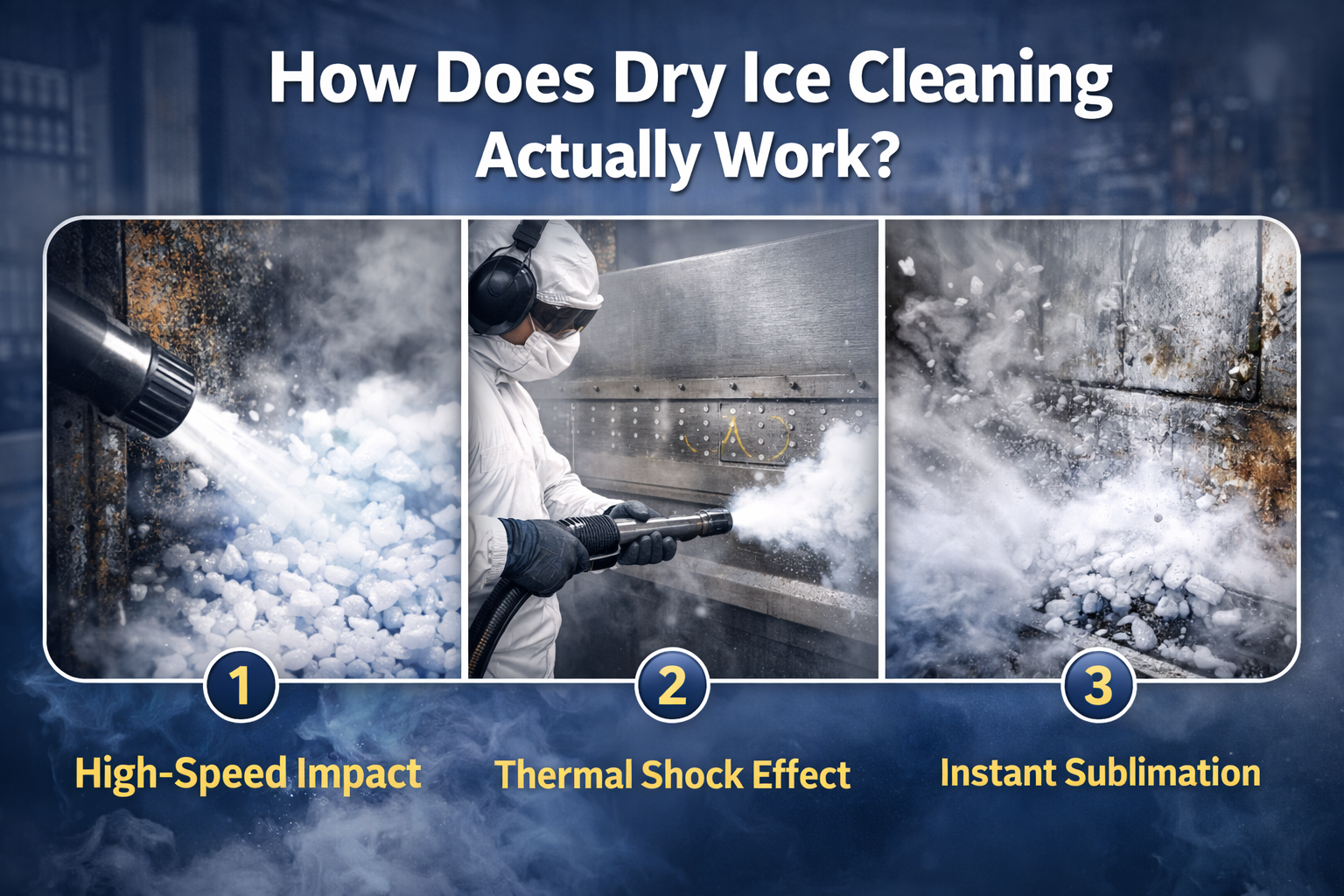
Dry ice cleaning works through a combination of impact, temperature shock, and rapid expansion.
First, compressed air pushes dry ice pellets through a specialized machine. When the pellets hit the surface, three things happen:
- The impact loosens surface dirt.
- The extreme cold causes contaminants to shrink and crack.
- The pellets instantly turn into gas, expanding and lifting debris away.
This process is powerful yet gentle. It removes contamination without grinding or scratching the surface. Because no water is involved, there is no risk of rust or electrical damage.
This method is ideal for buildings that contain electrical systems, machinery, or sensitive components that cannot tolerate moisture.
Where Can Dry Ice Be Used Inside Commercial Buildings?
Commercial properties often face heavy contamination. Restaurants deal with grease buildup. Factories struggle with oil and residue. Office buildings accumulate dust and pollutants in ventilation systems.
Dry Ice Uses in Building Maintenance are highly effective in:
- HVAC system cleaning
- Electrical panel cleaning
- Industrial machinery cleaning
- Kitchen exhaust system cleaning
- Fire and smoke damage restoration
- Mold remediation
- Graffiti removal
Because the process is dry and controlled, technicians can clean complex systems without dismantling large sections of equipment. This saves both time and money.
Is Dry Ice Cleaning Safe for Building Materials?
Yes, when handled by trained professionals, it is safe for most building materials.
Dry ice cleaning does not scratch metal, damage brick, or weaken structural components. It works well on:
- Concrete
- Steel
- Wood
- Brick
- Tiles
- Stone
- Industrial equipment
However, every building is different. A professional inspection ensures the right pressure level and pellet size for the job. Experts adjust the system according to surface sensitivity to avoid any risk.
Safety also depends on proper ventilation because carbon dioxide gas is released during cleaning. Professional teams follow strict safety protocols to maintain air quality.
Can Dry Ice Help with Mold and Water Damage Restoration?
Mold growth is a serious issue in many buildings. It damages structures and creates health risks. Traditional mold removal often involves chemicals and heavy scrubbing, which may spread spores.
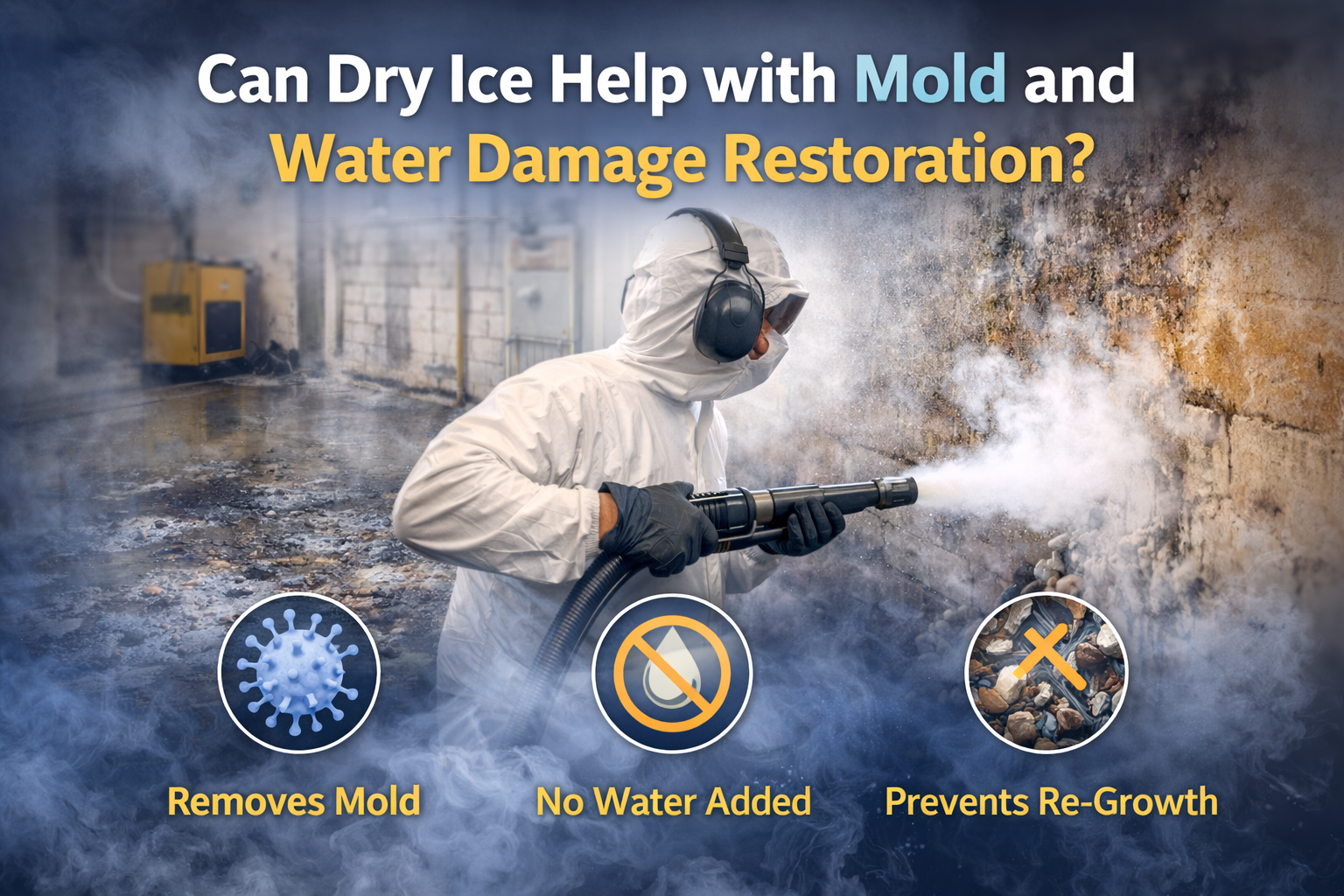
Dry ice cleaning removes mold from surfaces without adding moisture. Because the process is dry, it prevents further mold growth. It also reaches deep into cracks and corners where mold hides.
Restoration professionals trust this method for:
- Basement mold removal
- Crawl space cleaning
- Post flood restoration
- Smoke damage cleanup
Dry ice eliminates contaminants while protecting structural integrity.
How Does Dry Ice Improve Industrial Facility Maintenance?
Industrial facilities require regular deep cleaning to maintain productivity and safety. Machines collect grease, dust, and carbon deposits over time. If not cleaned properly, equipment performance decreases.
Dry Ice Uses in Building Maintenance provide a solution that allows cleaning without full shutdown. Technicians can clean machinery in place, which reduces operational delays.
Industries that benefit include:
- Manufacturing plants
- Food processing facilities
- Power plants
- Printing facilities
- Automotive workshops
Because no water is used, there is no risk of electrical short circuits or corrosion.
Is Dry Ice Cleaning Environmentally Responsible?
Many building owners want cleaning methods that reduce environmental impact. Dry ice cleaning supports this goal.
It does not use toxic chemicals. It does not create wastewater. It does not produce additional solid waste. The carbon dioxide used in dry ice cleaning is often captured from industrial processes, so it does not increase overall emissions.
This makes it a responsible choice for companies that want to follow modern environmental standards while maintaining high cleaning quality.
How Much Does Dry Ice Cleaning Cost Compared to Traditional Methods?
Cost depends on project size, contamination level, and accessibility. At first glance, dry ice cleaning may seem more expensive than simple pressure washing.
However, when you consider:
- Reduced labor hours
- Lower equipment downtime
- No secondary waste disposal
- Less damage to surfaces
- Improved efficiency
The overall investment often becomes more reasonable. Many property owners find that they save money over time because the method protects assets and reduces repair needs.
Who Should Hire Professional Dry Ice Cleaning Services?
Not every cleaning company offers this advanced method. Property owners should hire certified professionals with experience in building maintenance.
Look for service providers who:
- Have specialized dry ice equipment
- Follow strict safety standards
- Offer site inspection before cleaning
- Provide transparent pricing
- Have positive client reviews
Professional teams evaluate the building structure, contamination type, and safety conditions before starting the project.
Can Dry Ice Be Used for Historical or Sensitive Buildings?
Yes, it can be an excellent choice for heritage structures and sensitive materials. Traditional abrasive cleaning can damage old bricks, stone, or decorative surfaces.
Dry ice cleaning gently removes dirt, soot, and pollutants without grinding the base layer. This makes it suitable for:
- Historical monuments
- Churches
- Museums
- Decorative stone facades
Because the process is precise, it preserves architectural value while restoring appearance.
What Should Property Owners Know Before Choosing This Method?
Before scheduling service, property owners should consider:
- The type of contamination
- Surface material
- Ventilation conditions
- Accessibility of the cleaning area
- Budget expectations
A professional consultation helps determine whether dry ice cleaning is the best option. In many cases, it proves to be one of the most efficient and safe solutions available today.
FAQs:
What is dry ice used for in construction?
Dry ice is used in construction for surface cleaning, paint removal, mold remediation, grease removal, and fire damage restoration without damaging underlying materials.
What materials can be cleaned with dry ice?
Dry ice can safely clean concrete, steel, brick, wood, tiles, stone, industrial equipment, and electrical components.
What is the main purpose of dry ice?
The main purpose of dry ice is cooling and industrial cleaning. In building maintenance, it removes contaminants without using water or chemicals.
Is dry ice bad for concrete?
No, dry ice is not harmful to concrete when used correctly. It removes dirt and residue without scratching or weakening the surface.
How long will dry ice keep stuff cold?
Dry ice can keep items cold for about 18 to 24 hours, depending on the quantity used and storage conditions.
What are the benefits of dry ice cleaning?
Key benefits include chemical free cleaning, no moisture, no secondary waste, fast operation, and surface protection.
When should dry ice be used?
Dry ice should be used when heavy contamination needs removal, sensitive equipment requires cleaning, or mold and grease must be eliminated safely.
Conclusion: Why Should You Consider Dry Ice Uses in Building Maintenance for Your Property?
If you are tired of slow, messy, and risky cleaning methods, it is time to consider Dry Ice Uses in Building Maintenance. This modern approach delivers powerful cleaning without water damage, chemical exposure, or surface destruction.
It protects your investment, improves safety, and reduces downtime. Whether you manage a commercial facility, industrial plant, or residential property, this method offers a smart and reliable solution. By choosing trained professionals and advanced equipment, you ensure long lasting results and higher property value.
Dry ice cleaning is not just a trend. It is a practical solution for modern building care. If you want efficiency, safety, and superior performance, this method deserves serious attention.
Read More:
What is Dry Ice and Why It Matters in Saudi Arabia
What Is Dry Ice Used For in the Modern World of Industrial Gas and Advanced Cooling
Best Dry Ice Blasting Saudi Arabia: Eco Friendly and Efficient Cleaning Solutions
Dry Ice Dangers You Cannot Ignore: Hidden Health Risks and Safe Handling Truths