


Summarize This Post With
This Page Covers :
-
What Is Dry Ice in Car Detailing?
-
Why Traditional Car Detailing Methods Fall Short
-
How Dry Ice in Car Detailing Works
-
How to Use Dry Ice in Car Detailing
-
Major Benefits of Dry Ice Detailing
-
Best Areas to Clean with Dry Ice
-
Engine Bay Cleaning
-
Interior Deep Cleaning
-
Undercarriage Restoration
-
Wheels and Brake Components
-
Is Dry Ice Detailing Safe for Vehicles?
-
Cost of Dry Ice in Car Detailing
-
Environmental Advantages
-
Who Should Choose Dry Ice Detailing?
-
Common Myths About Dry Ice Cleaning
-
Choosing a Professional Service
-
Maintenance After Dry Ice Detailing
-
Future of Car Detailing
-
FAQs:
-
Can dry ice take out dents in cars?
-
Will ice damage car paint?
-
Does dry ice cleaning damage paint?
-
What is the easiest way to remove a dent from a car?
-
Conclusion
Every car owner wants a clean, fresh, and well maintained vehicle. Traditional cleaning methods often leave hidden dirt, grease, and stains behind. Many detailing techniques also use strong chemicals that can harm sensitive car parts. This creates a big problem for car enthusiasts and professional detailers who want perfect results without risk.
Here is where Dry Ice in Car Detailing becomes a game changing solution. It offers a modern, powerful, and safe way to clean vehicles from the inside out. Dry ice cleaning removes dirt from areas that brushes, water, and chemicals cannot reach. It works fast, leaves no residue, and keeps original car components safe.
This article explains everything in simple language. You will learn what dry ice detailing is, how it works, and why it is becoming popular in the automotive world. If you want better cleaning, longer vehicle life, and professional level results, this guide will give you complete clarity.
What Is Dry Ice in Car Detailing?
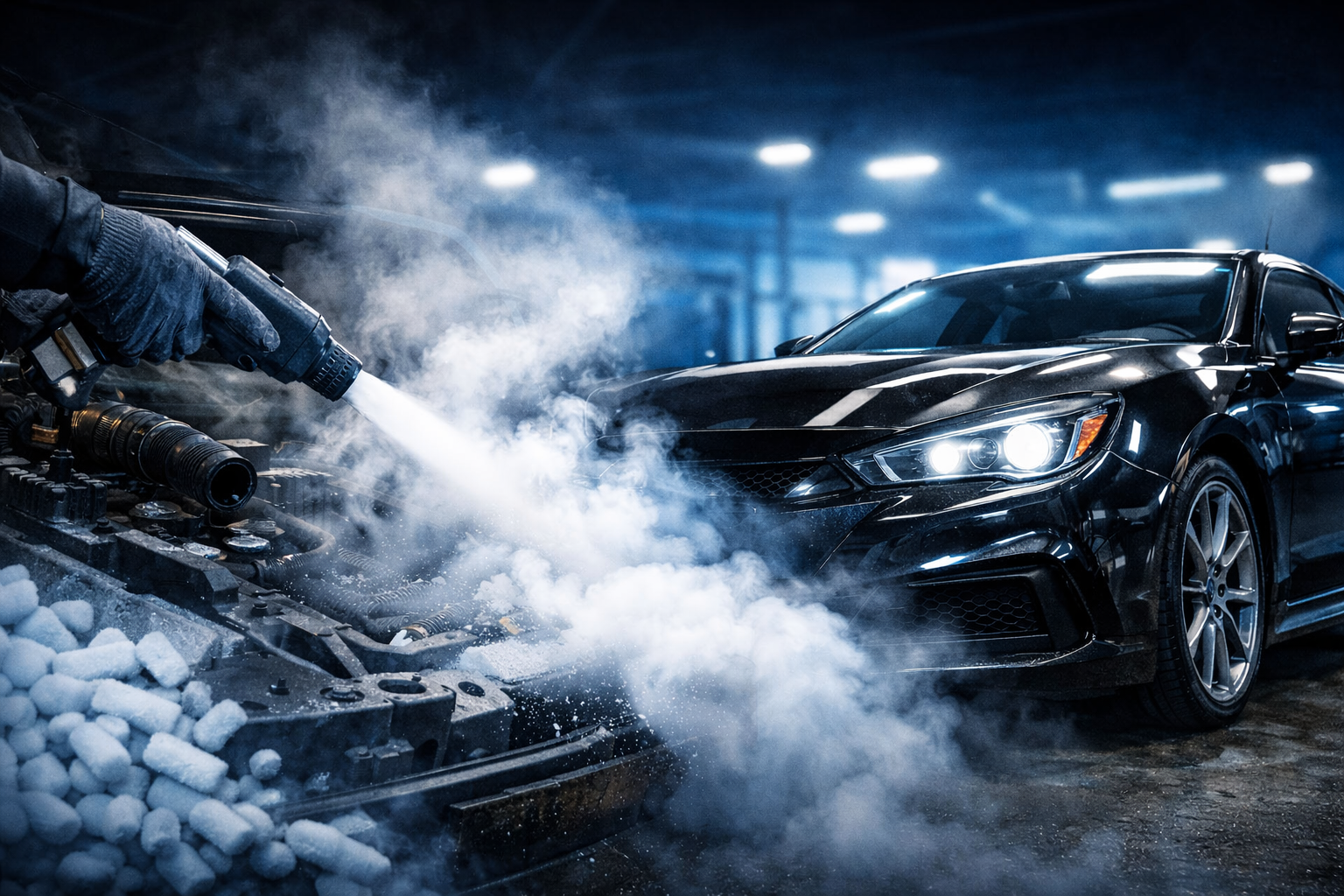
Dry Ice in Car Detailing is an advanced cleaning process that uses solid carbon dioxide pellets to remove dirt and contaminants from vehicle surfaces. These pellets are blasted at high speed with special equipment. When they hit the surface, they instantly turn into gas and lift away grime.
Unlike pressure washing or chemical cleaning, dry ice blasting does not use water or harsh products. It cleans through a natural process of impact and temperature change. This makes it one of the safest and most effective detailing methods available today.
Professional detailers use this method to clean engines, interiors, undercarriages, and delicate car parts. It is especially useful for restoring classic cars and luxury vehicles where original condition matters most.
Why Traditional Car Detailing Methods Fall Short
Old style detailing techniques depend heavily on water, soap, brushes, and strong cleaners. These methods create several problems.
Water based cleaning can cause rust in metal areas and electrical damage in engine bays. Brushes and scrubbing tools often scratch sensitive surfaces. Chemicals leave odors, stains, and harmful residues. Some tight areas of a car remain completely unreachable with normal tools.
Car owners spend a lot of money on detailing but still see grease in engine corners, dust in vents, and stains under seats. These frustrations push professionals to look for better options. Dry ice cleaning solves these issues smartly and efficiently.
How Dry Ice in Car Detailing Works
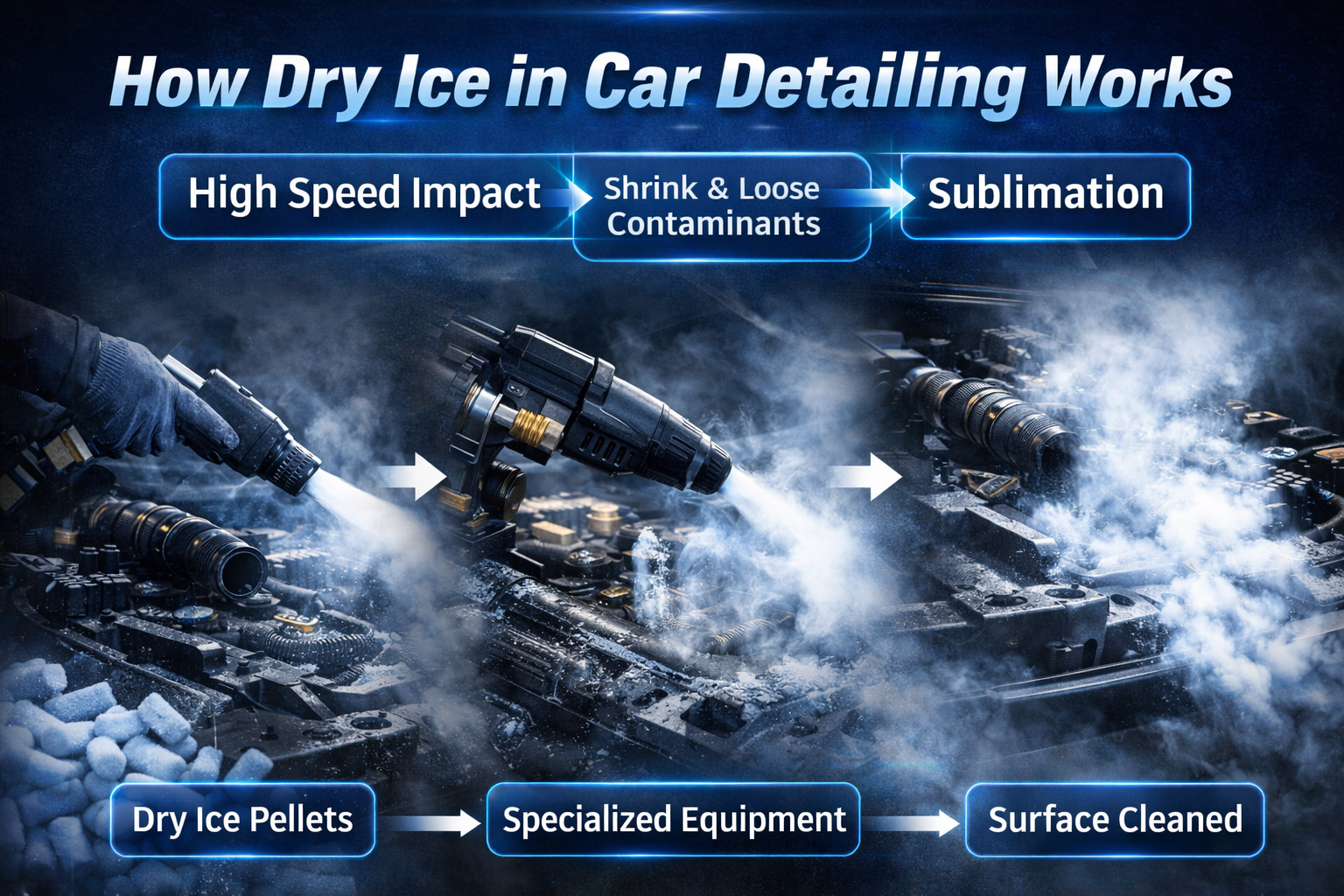
The process behind Dry Ice in Car Detailing is simple but highly effective. Specialized machines shoot tiny dry ice pellets onto dirty surfaces using compressed air. When the pellets touch the surface, three actions happen at the same time.
First, the pellets hit the dirt with controlled force and break its bond with the surface. Second, the extreme cold temperature shrinks and loosens contaminants. Third, the pellets turn into gas and lift the dirt away without adding moisture.
Because dry ice disappears after impact, there is no leftover waste to clean. This makes the entire process faster and cleaner than any traditional method.
How to Use Dry Ice in Car Detailing
Many people ask how to use dry ice in car detailing in a safe and correct way. The process requires proper equipment and trained hands. Here is a clear step by step explanation.
A professional begins by inspecting the vehicle to identify problem areas. Then the correct nozzle and pressure settings are chosen based on the surface type. Sensitive areas require gentle settings, while metal parts can handle stronger blasts.
The detailer directs dry ice pellets toward the dirty section in smooth motions. No water or chemicals are needed. Dirt, grease, oil, and dust instantly disappear from the surface.
After cleaning, the area is checked for any remaining spots. Because no moisture is involved, the car can be used immediately after the service. This method is safe for paint, rubber, plastic, wiring, and metal components.
Major Benefits of Dry Ice Detailing
Dry ice cleaning offers advantages that normal car detailing cannot match.
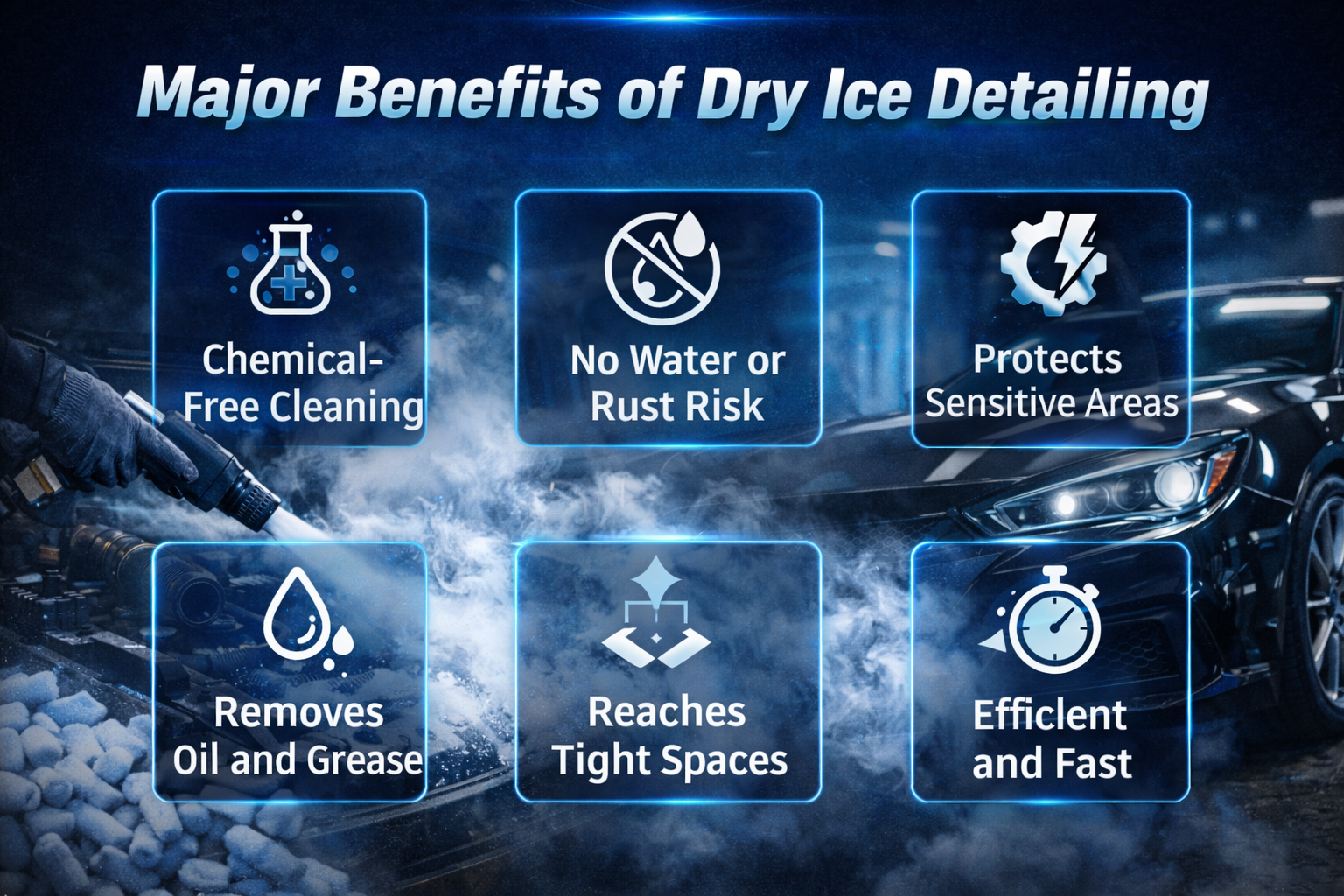
- It cleans without water and eliminates the risk of rust.
- It reaches narrow and complex spaces with ease.
- It removes heavy grease and oil within minutes.
- It protects original factory coatings and materials.
- It works without toxic chemicals or strong odors.
- It reduces cleaning time by a large margin.
For high value cars, vintage vehicles, and luxury models, this method preserves authenticity and increases resale value. These benefits make dry ice detailing a preferred option among serious car lovers.
Best Areas to Clean with Dry Ice
Dry Ice in Car Detailing can be used on many parts of a vehicle.
Engine Bay Cleaning
Engines collect years of grease, oil leaks, and road dirt. Traditional washing risks water damage to electrical parts. Dry ice blasting cleans the engine safely and restores a like new appearance without any liquid.
Interior Deep Cleaning
Car interiors hide dust in vents, seat rails, dashboards, and carpets. Dry ice removes stubborn stains, gum, food particles, and bad smells without soaking fabrics.
Undercarriage Restoration
Mud, salt, and road grime damage the underside of vehicles. Dry ice cleans the entire underbody and exposes rust problems early. It is perfect for car restoration projects.
Wheels and Brake Components
Brake dust is difficult to remove with normal cleaners. Dry ice cleans wheels and calipers effectively without scratching or damaging finishes.
Is Dry Ice Detailing Safe for Vehicles?
Yes, this method is extremely safe when handled by professionals. The pellets are non abrasive and softer than most car surfaces. They do not damage paint, glass, rubber seals, or wiring.
Because no chemicals are involved, there is no risk of discoloration or corrosion. Many high end car manufacturers and museums use dry ice cleaning to preserve valuable vehicles.
Cost of Dry Ice in Car Detailing
The price of dry ice detailing depends on vehicle size and condition. It may cost more than regular detailing at first glance. However, the results last longer and require fewer repeat services.
Considering the time saved, superior cleanliness, and protection of car components, the overall value becomes much higher. For luxury and classic cars, it is one of the smartest investments an owner can make.
Environmental Advantages
Dry ice cleaning is friendly to nature. It produces no secondary waste, uses no harmful chemicals, and consumes very little energy. The carbon dioxide used in pellets is recycled from other industrial processes.
Car owners who care about green solutions find this method ideal. It delivers powerful cleaning while keeping the environment safe.
Who Should Choose Dry Ice Detailing?
This service is perfect for several types of users.
- Owners of expensive or classic cars
- People preparing vehicles for sale
- Car collectors and enthusiasts
- Auto workshops and restoration centers
- Anyone wanting deep professional cleaning
If you want the highest standard of vehicle care, dry ice detailing is the right choice.
Common Myths About Dry Ice Cleaning
Some believe dry ice can damage paint or freeze car parts. These ideas are incorrect. When used properly, the process is gentle and controlled.
Others think it is only for engines. In reality, it works on interiors, exteriors, and even delicate electronics. Knowledge and skilled operators remove all such concerns.
Choosing a Professional Service
Dry ice detailing requires specialized machines and experience. Always select trained professionals with good reviews and proper equipment. Ask about their process and previous work before booking a service. A qualified detailer will inspect your vehicle, explain the plan, and deliver safe results without shortcuts.
Maintenance After Dry Ice Detailing
After a dry ice session, maintaining your car becomes easier. Surfaces stay cleaner for longer because no sticky residues remain. Regular light cleaning will keep the vehicle fresh for months. Many owners schedule dry ice detailing once or twice a year for complete protection and long term care.
Future of Car Detailing
The automotive cleaning industry is moving toward smarter and safer technologies. Dry ice blasting represents the future of professional detailing. As more people experience its benefits, this method will become a standard service worldwide.

FAQs:
Can dry ice take out dents in cars?
No, dry ice cannot remove dents from cars. Dry ice detailing is strictly a cleaning process and does not repair physical body damage. Dents require specialized repair methods such as paintless dent repair or traditional bodywork techniques.
Will ice damage car paint?
Regular ice can damage car paint if rubbed or applied with force, as it may cause scratches. However, dry ice used in professional detailing is completely different. When applied correctly, dry ice pellets do not harm car paint and are safe for all exterior surfaces.
Does dry ice cleaning damage paint?
No, dry ice cleaning does not damage paint. The pellets are non abrasive and turn into gas upon impact, leaving no scratches or residue. This makes dry ice cleaning one of the safest methods for cleaning painted vehicle surfaces.
What is the easiest way to remove a dent from a car?
The easiest way to remove a dent from a car is through paintless dent repair. This method uses specialized tools to gently push the dent back into place without affecting the original paint. It is fast, affordable, and highly effective for small to medium dents.
Conclusion
Dry Ice in Car Detailing has transformed the way vehicles are cleaned and restored. It provides deeper cleaning, protects sensitive parts, and works without water or chemicals. Traditional methods cannot match its speed, safety, and effectiveness.
Whether you own a daily driver, a luxury car, or a classic vehicle, dry ice detailing delivers unmatched results. It saves time, improves appearance, and extends the life of your car components.
Choosing this modern technique means choosing better care for your vehicle. With its many advantages and proven performance, dry ice cleaning stands as the ultimate solution for professional car detailing today.
Read More:
What is Dry Ice and Why It Matters in Saudi Arabia
What Is Dry Ice Used For in the Modern World of Industrial Gas and Advanced Cooling
Best Dry Ice Blasting Saudi Arabia: Eco Friendly and Efficient Cleaning Solutions
Dry Ice Dangers You Cannot Ignore: Hidden Health Risks and Safe Handling Truths