


Summarize This Post With
This Page Covers :
-
Why Sample Safety Matters in Medical Laboratories
-
Why Dry Ice Is Preferred Over Traditional Cooling
-
How Medical Labs Use Dry Ice for Sample Safety During Collection
-
Role of Dry Ice in Sample Transportation
-
Storage of Medical Samples Using Dry Ice
-
Dry Ice Safety Precautions in Medical Labs
-
Choosing the Best Dry Ice for Sample Safety
-
Dry Ice Side Effects and Risk Awareness
-
Compliance With Medical Transport Regulations
-
How Dry Ice Protects Diagnostic Accuracy
-
Why Dry Ice Is Essential for Modern Medical Testing
-
Future Importance of Dry Ice in Medical Laboratories
-
FAQs:
-
How long can samples be stored in dry ice?
-
What are the safety precautions for dry ice?
-
How to pack samples with dry ice?
-
Are there any risks of using dry ice?
-
How to store dry ice safely?
-
How to freeze dry samples?
-
Conclusion
Medical laboratories handle some of the most sensitive materials in the world. Blood samples, tissue specimens, test cultures, and diagnostic materials must remain stable from the moment they are collected until final analysis. Even a slight temperature change can compromise results and necessitate the repetition of tests.
This is one of the biggest pain points labs face daily. Sample rejection increases cost, delays diagnosis, and damages trust between labs and healthcare providers. Traditional cooling methods often fail when long distance transport or extended storage is required.
This is why many professionals depend on dry ice. In this guide, we explain how medical labs use dry ice for sample safety, why it is trusted globally, what precautions matter, and how it protects sample integrity at every stage.

Why Sample Safety Matters in Medical Laboratories
Every medical decision depends on accurate test results. If a sample degrades, the report becomes unreliable. This can lead to wrong diagnosis, delayed treatment, or repeated testing.
Samples contain active biological elements, such as proteins and cells, that can change quickly if exposed to heat. For example, enzymes, proteins that speed up chemical reactions, break down, and bacterial activity increases. Even short exposure can change the chemical makeup of a sample.
Medical laboratories must therefore maintain a stable cold environment from collection to testing. This requirement becomes more critical during transportation between hospitals, diagnostic centers, and central labs.
Why Dry Ice Is Preferred Over Traditional Cooling
Normal ice melts quickly and produces water. This moisture can contaminate samples or damage packaging. Refrigerated packs also fail to maintain extremely low temperatures for long periods.
Dry ice provides intense cold without liquid formation. It changes directly from solid to gas, keeping the environment dry and stable. This makes it highly effective for medical sample preservation.
Medical labs prefer dry ice because it delivers consistent temperature control even during long transport or unexpected delays.
How Medical Labs Use Dry Ice for Sample Safety During Collection
Once a sample is collected, time becomes critical. Medical staff immediately place specimens in insulated containers prepared with dry ice.
This rapid cooling slows biological activity instantly. Blood components remain stable. Tissue samples retain structure. Diagnostic markers remain unchanged. Using dry ice at this early stage reduces the risk of degradation before the sample even leaves the collection site.

Role of Dry Ice in Sample Transportation
Transportation is the most vulnerable phase. Samples often travel between cities or even countries. Delays can happen due to traffic, logistics, or clearance procedures. Dry ice ensures that the temperature remains stable throughout the journey. It continues cooling without interruption and does not depend on electricity.
Medical labs calculate the required amount of dry ice based on distance, container insulation, and transport time. This planning ensures sample safety until delivery.
Storage of Medical Samples Using Dry Ice
In many laboratories, dry ice is used for temporary storage when ultra low freezers (which keep samples far below freezing at very cold temperatures, often below -70°C) are unavailable or during equipment maintenance.
Dry ice maintains deep freezing conditions that preserve genetic material and biological compounds. This is especially important for research samples and reference specimens.
Labs store dry ice in specialized insulated containers that allow safe gas release while maintaining internal temperature.
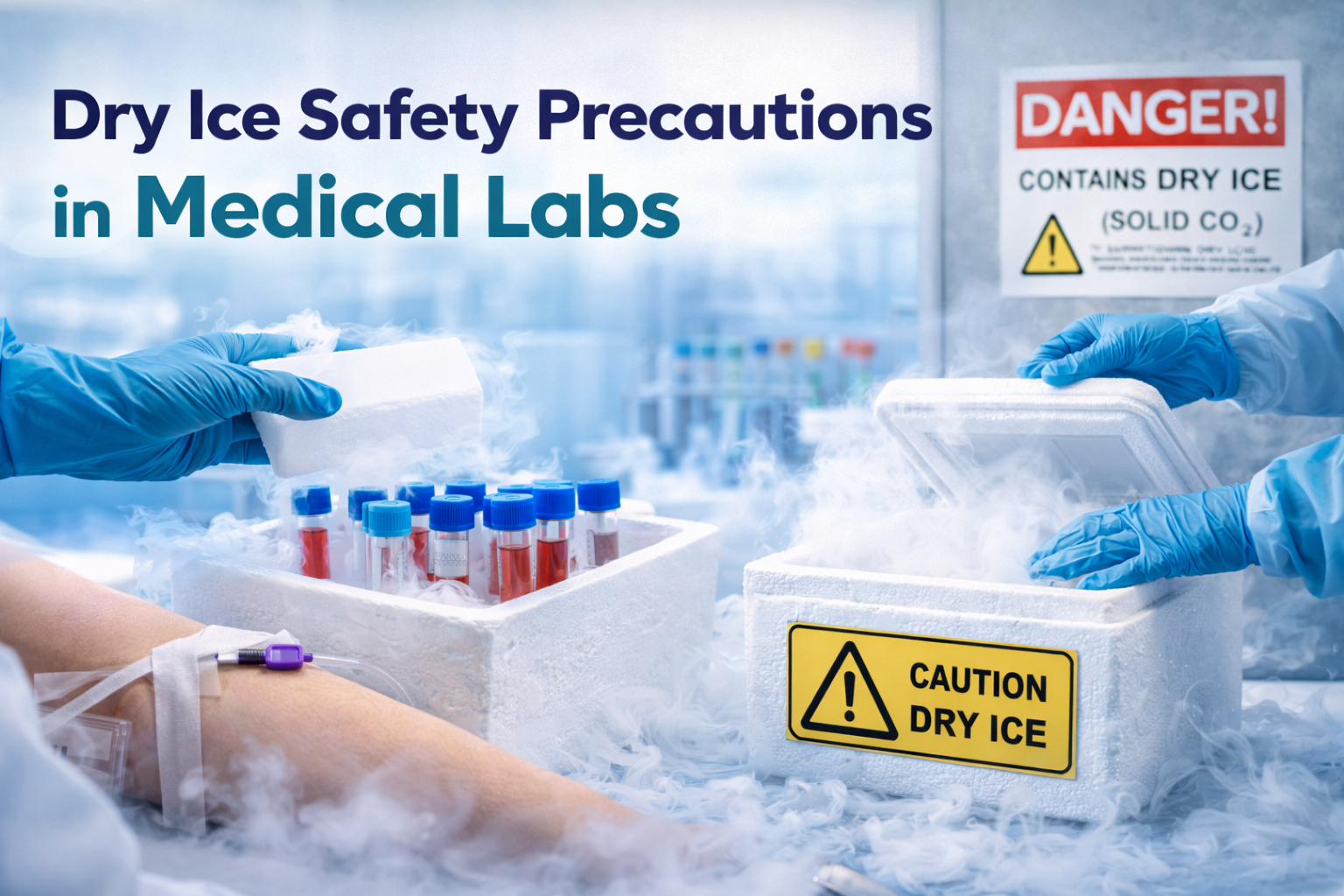
Dry Ice Safety Precautions in Medical Labs
While dry ice is extremely useful, laboratories follow strict safety rules. Technicians never touch dry ice directly. Protective gloves are mandatory to prevent cold injuries. Proper ventilation is essential. Carbon dioxide gas released during sublimation can reduce oxygen levels in closed rooms. Storage areas are designed to allow airflow.
Containers are never completely sealed. Gas expansion must escape safely to avoid pressure buildup. Clear labeling ensures that all staff are aware of the dry ice presence. Training programs help prevent handling errors.
Choosing the Best Dry Ice for Sample Safety
Medical laboratories do not use just any dry ice. Quality plays a major role. High purity dry ice provides stable cooling and predictable sublimation. Poor quality material may evaporate too quickly and compromise sample protection.
Pellet size selection depends on container design and sample volume. Smaller pellets allow even cooling while larger blocks provide longer duration. Reliable suppliers ensure consistent production standards and safe delivery practices.
Dry Ice Side Effects and Risk Awareness
Although dry ice is safe when handled properly, labs remain aware of possible side effects. Exposure to carbon dioxide gas in poorly ventilated areas may cause headache or breathing discomfort. This risk increases when large quantities are stored indoors.
Direct skin contact can cause cold burns. These injuries often occur without immediate pain, making protective gear essential. Pressure buildup can occur if dry ice is placed inside sealed containers. This is why proper storage equipment is mandatory. Awareness and training prevent nearly all incidents.
Compliance With Medical Transport Regulations
Medical laboratories must follow national and international transport rules. Dry ice shipments require correct labeling and documentation. Transport teams receive instructions regarding ventilation and handling. Airlines and courier services also specify dry ice quantity limits. Following these regulations ensures safe delivery and legal compliance.
How Dry Ice Protects Diagnostic Accuracy
When samples remain stable, test results remain accurate. Dry ice prevents protein breakdown, chemical shifts, and bacterial growth. This stability ensures that laboratory reports reflect the true condition of the patient sample. Accurate diagnostics improve treatment decisions and strengthen trust between labs and healthcare providers.
Why Dry Ice Is Essential for Modern Medical Testing
Modern diagnostics rely on advanced techniques that require extreme precision. Molecular testing, genetic analysis, and vaccine research depend heavily on sample integrity.
Dry ice supports these advanced processes by maintaining strict temperature control throughout the workflow. Without dry ice, many modern medical procedures would face serious limitations.
Future Importance of Dry Ice in Medical Laboratories
As healthcare systems expand and diagnostic testing increases, sample transport volume continues to rise. Dry ice will remain a central tool in medical logistics due to its reliability, efficiency, and independence from power sources. Innovations in packaging and insulation will further improve safety and handling efficiency.

FAQs:
How long can samples be stored in dry ice?
Samples can usually be stored in dry ice for twenty four to seventy two hours, depending on container quality and dry ice quantity. Proper insulation helps maintain a stable temperature for longer periods.
What are the safety precautions for dry ice?
Dry ice should always be handled with protective gloves to avoid cold burns. Storage areas must have proper ventilation to prevent carbon dioxide buildup.
How to pack samples with dry ice?
Samples should be sealed properly before placing them inside insulated containers. Dry ice is added around the samples while keeping space for safe gas release.
Are there any risks of using dry ice?
Risks include skin injury from direct contact and breathing discomfort in poorly ventilated areas. These risks are minimized by following correct handling procedures.
How to store dry ice safely?
Dry ice should be kept in insulated containers that are not airtight. It must be stored in open or ventilated areas away from small closed rooms.
How to freeze dry samples?
Samples are first frozen at a very low temperature using dry ice or deep freezing methods. After freezing, special laboratory equipment removes moisture while protecting the sample structure.
Conclusion
How Medical Labs Use Dry Ice for Sample Safety is a critical topic in modern healthcare operations. Dry ice protects sensitive samples from degradation, supports accurate diagnosis, and ensures reliability throughout storage and transportation.
By using high quality dry ice, following strict safety procedures, and maintaining proper ventilation, medical laboratories can achieve consistent sample protection. Dry ice remains one of the most trusted solutions for safeguarding medical samples and supporting life saving diagnostics.
Read More:
What is Dry Ice and Why It Matters in Saudi Arabia
What Is Dry Ice Used For in the Modern World of Industrial Gas and Advanced Cooling
Best Dry Ice Blasting Saudi Arabia: Eco Friendly and Efficient Cleaning Solutions
Dry Ice Dangers You Cannot Ignore: Hidden Health Risks and Safe Handling Truths