

Summarize This Post With
This Page Covers :
-
What Dry Ice Actually Is and Why It Behaves Differently
-
Dry Ice Dangers and the Human Body
-
Dry Ice Dangers at Home Explained Clearly
-
Is Dry Ice Dangerous to Touch Even for a Short Time
-
Is Dry Ice Flammable or Explosive
-
What Is Dry Ice Used For in Professional and Industrial Settings
-
Uses of Dry Ice in Real World Applications
-
Dry Ice Dangers and Precautions Based on Research
-
Emergency Response and First Aid Awareness
-
Why Dry Ice Dangers Are Often Ignored
-
FAQs:
-
Is dry ice more dangerous than regular ice?
-
What are the symptoms of dry ice poisoning?
-
What happens if you touch dry ice for 1 second?
-
What to do if dry ice goes down the sink?
-
Can I eat food that has touched by dry ice?
-
Is dry ice safe for humans?
-
Conclusion
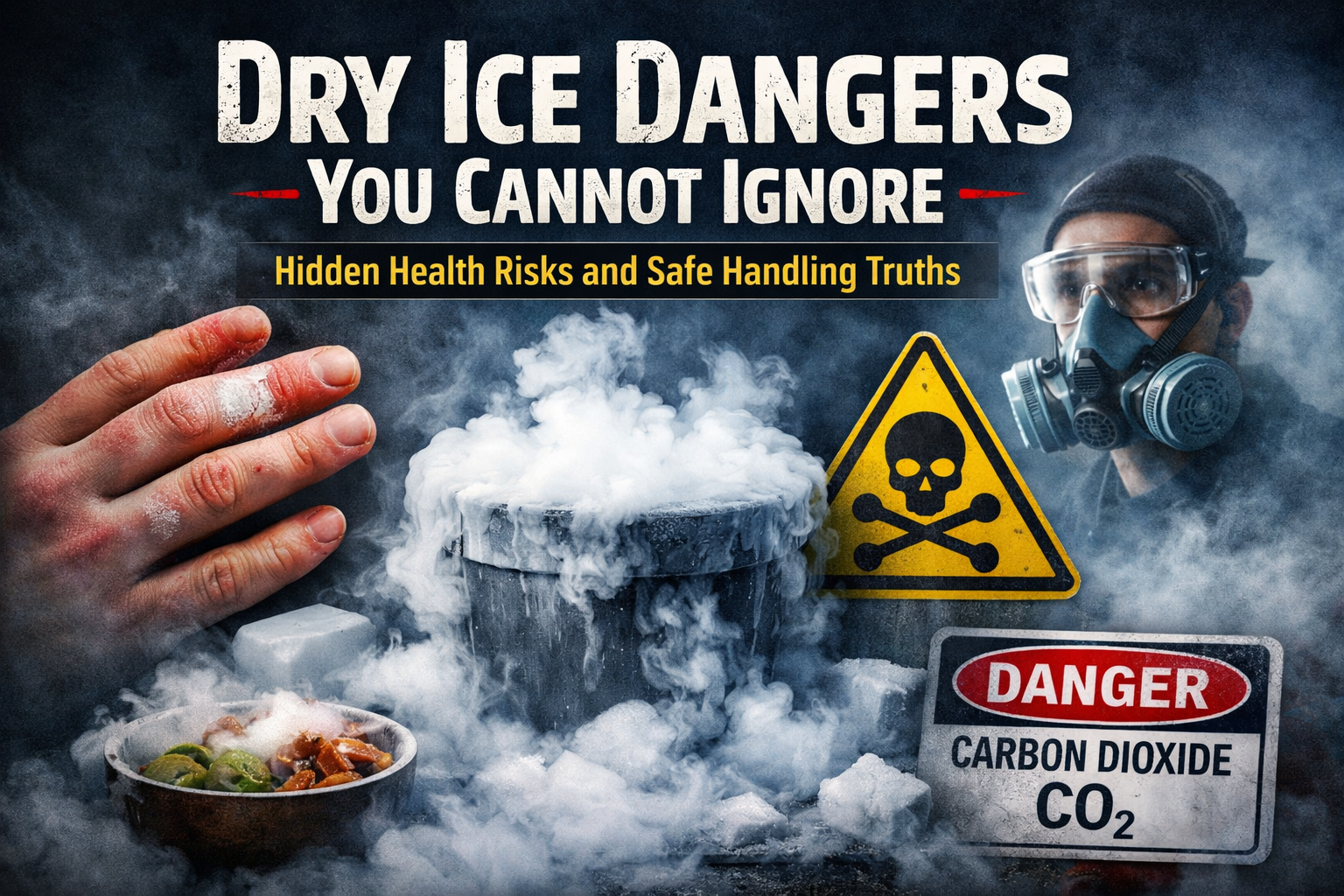
Dry ice looks fascinating. Thick white fog spreads across the floor, food stays frozen without melting water, and everything feels clean and modern. This is exactly why people underestimate it. The reality is that dry ice is one of the most misunderstood substances commonly used in homes, businesses, and laboratories.
People usually search for Dry Ice Dangers after something already feels wrong. A burning sensation on the skin, sudden dizziness in a closed room, or confusion after transporting dry ice in a car. The biggest danger is not dry ice itself, but the false sense of safety that surrounds it.
Dry ice does not warn you. It has no smell, no color, and no sound. Yet it can burn skin, damage internal organs, and silently deprive the air you breathe of oxygen. Many accidents happen simply because people do not understand how dry ice behaves once it leaves its container.
This article goes far beyond surface level information. It explains the science, the health risks, the real world uses, and the exact reasons dry ice becomes dangerous in everyday situations. Every point discussed here is based on real handling conditions, not theory.
What Dry Ice Actually Is and Why It Behaves Differently
Dry ice is solid carbon dioxide. Unlike water ice, it does not turn into liquid when it warms up. Instead, it changes directly from a solid into a gas. This physical process is known as sublimation. Because of this, dry ice constantly releases carbon dioxide into the surrounding air.
The temperature of dry ice is extremely low, around minus seventy eight degrees Celsius. This makes it far colder than household freezers. When this extreme cold comes into contact with skin or moisture, it causes immediate freezing of tissue.
What makes dry ice especially dangerous is that its gas form is heavier than air. Carbon dioxide collects at lower levels, pushing oxygen upward. In enclosed spaces, this creates an invisible layer of low oxygen air that the human body cannot tolerate.
Dry Ice Dangers and the Human Body
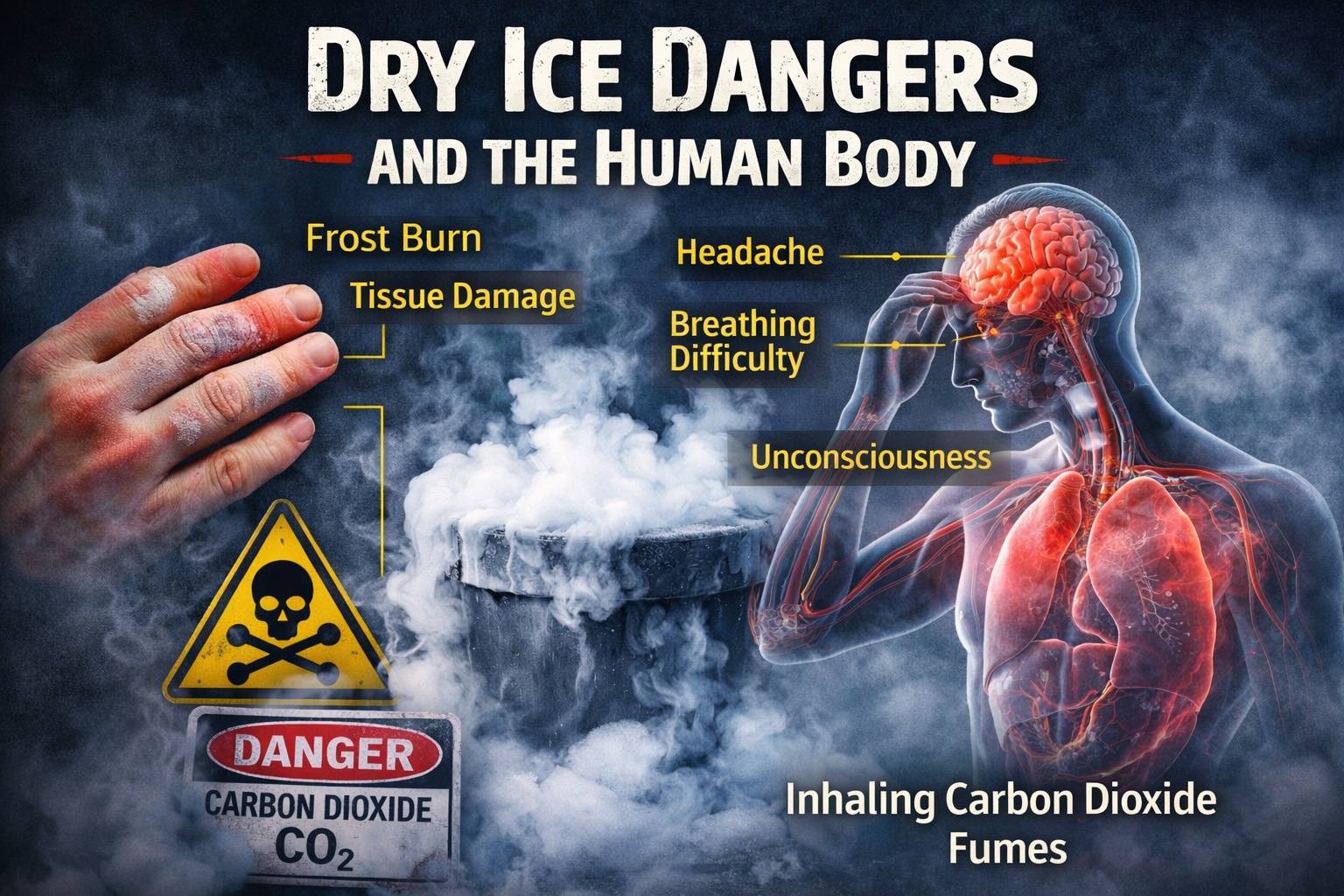
Understanding how dry ice affects the body explains why it must be handled carefully. When skin touches dry ice, the moisture on the skin freezes instantly. Blood flow to the area reduces rapidly, and cells begin to die.
This is why dry ice burns often look white or pale at first and become painful later. Many victims delay treatment because pain does not always appear immediately.
Breathing in carbon dioxide released from dry ice is even more dangerous. Oxygen levels in the blood drop while carbon dioxide levels rise. This disrupts brain function. Symptoms often begin with headache, rapid breathing, dizziness, and confusion. Continued exposure can lead to unconsciousness and, in extreme cases, death.
People often ask what to do if they inhale dry ice fumes because they experience symptoms without understanding the cause. The lack of smell makes carbon dioxide exposure especially dangerous.
Dry Ice Dangers at Home Explained Clearly
Dry ice dangers at home are increasing as more people use it for food delivery, parties, and online experiments. Homes are not designed for carbon dioxide control. Kitchens, storage rooms, and vehicles have limited ventilation. When dry ice is placed in these spaces, gas concentration can rise quickly without any visible warning.
Using dry ice in drinks or food presentations is one of the most dangerous trends. Even small fragments accidentally swallowed can cause severe internal frost burns. This is why the question Is dry ice edible must always be answered clearly. Dry ice should never be eaten or allowed to touch food directly.
Children are at higher risk because they are curious and unaware of danger. Pets are also vulnerable because carbon dioxide settles closer to the floor, exactly where animals breathe.
Is Dry Ice Dangerous to Touch Even for a Short Time
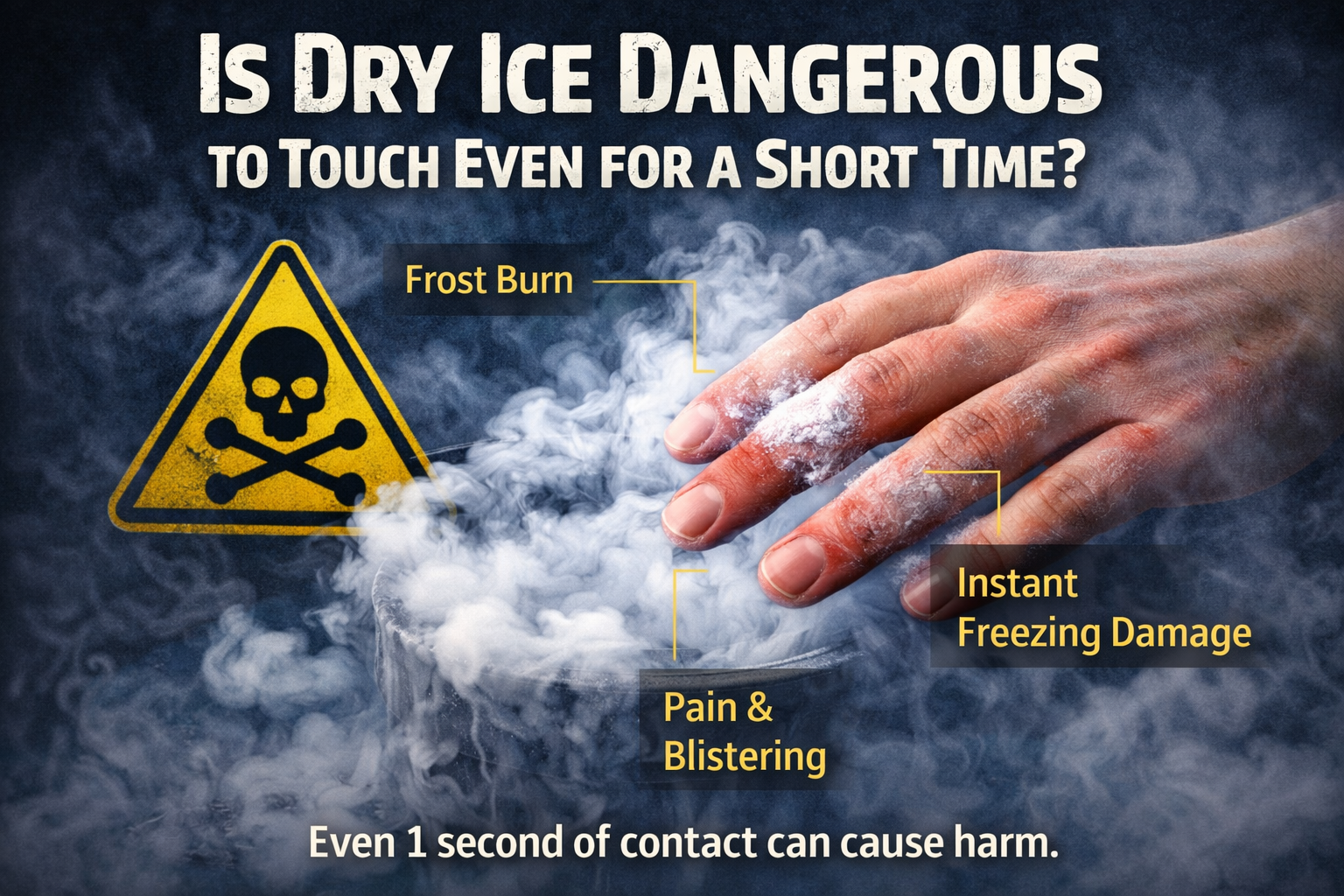
Many people believe quick contact is safe. This is incorrect. Touching dry ice even briefly can cause frostbite. The damage depends on skin moisture, pressure, and exposure time. Wet skin freezes faster. Jewelry and metal conduct cold quickly, making injuries more severe.
Protective gloves are necessary, but gloves alone do not make dry ice safe. They only reduce direct contact risk.
Is Dry Ice Flammable or Explosive
Dry ice itself is not flammable. It does not burn and does not support fire. However, this often leads people to underestimate its danger.
When dry ice is placed inside sealed containers, pressure builds rapidly as gas forms. This can cause containers to burst violently. Injuries from exploding containers have resulted in serious trauma. The danger is not fire but pressure and oxygen displacement.
What Is Dry Ice Used For in Professional and Industrial Settings
Despite the risks, dry ice is widely used because of its efficiency. In food logistics, dry ice keeps products frozen without water damage. In medicine, it preserves vaccines, samples, and organs at precise temperatures. In entertainment, it creates dramatic fog effects. In manufacturing, it is used for cleaning machinery without chemicals.
These uses answer the question of what dry ice is used for in a controlled environment. The difference between safe and dangerous use is training, ventilation, and protective equipment.
Uses of Dry Ice in Real World Applications
People searching for uses of dry ice are usually trying to understand why something so dangerous is still allowed. Dry ice is used for transport because it maintains a consistent cold temperature. It is used in laboratories because it does not leave residue.
It is used in events for visual effects because fog stays low. It is used in agriculture for pest control. It is used in industrial cleaning for precision work. Each use follows strict safety protocols. When those protocols are ignored, accidents happen.
Dry Ice Dangers and Precautions Based on Research
Scientific studies show that carbon dioxide levels above normal atmospheric concentration affect brain and heart function. Enclosed spaces with dry ice can reach dangerous levels within minutes.
Proper precautions include continuous airflow, open containers, limited quantities, and trained handling. Storage areas must never be airtight. Transportation must include ventilation. Dry ice should never be stored in living spaces.
Emergency Response and First Aid Awareness
If carbon dioxide exposure is suspected, immediate action is required. Fresh air is the first and most important response. Delays can worsen symptoms quickly. For skin contact injuries, medical evaluation is necessary even if the pain feels minor. Frost injuries progress over time.
Why Dry Ice Dangers Are Often Ignored
The visual appeal of dry ice creates a false sense of safety. Fog feels theatrical, scientific, and harmless. This perception is the root of most accidents. Dry ice is not dangerous because it is neither rare nor toxic. It is dangerous because it is common and misunderstood.

FAQs:
Is dry ice more dangerous than regular ice?
Yes, dry ice is more dangerous than regular ice because it is extremely cold and releases carbon dioxide gas. Regular ice only causes mild cold burns, while dry ice can cause severe skin damage and breathing problems.
What are the symptoms of dry ice poisoning?
Common symptoms include headache, dizziness, shortness of breath, confusion, nausea, and feeling weak. In serious cases, it can lead to unconsciousness due to low oxygen levels.
What happens if you touch dry ice for 1 second?
Even one second of direct contact can cause frostbite on the skin. The skin may turn white or numb at first, followed by pain and blistering later.
What to do if dry ice goes down the sink?
Do not pour water on it or block the sink. Open windows for ventilation and allow the dry ice to evaporate naturally. Never touch it or try to force it down the drain.
Can I eat food that has touched by dry ice?
No, food that has directly touched dry ice should not be eaten. Direct contact can cause freezing damage and make the food unsafe for consumption.
Is dry ice safe for humans?
Dry ice is safe for humans only when handled correctly with proper ventilation and protection. Without safety measures, it can cause burns, breathing issues, and serious health risks.
Conclusion
Dry ice is not a novelty item. It is a powerful cooling agent with serious risks. Dry Ice Dangers include skin injuries, oxygen displacement, internal burns, and pressure related accidents. These dangers exist at home, in vehicles, and in professional settings.
When handled with knowledge and respect, dry ice serves valuable purposes. When handled casually, it becomes a silent hazard. Understanding how dry ice works is not optional. It is essential. Awareness protects health, prevents injury, and saves lives. If you use dry ice in any capacity, treat it with the seriousness it deserves.
Read More:
What is Dry Ice and Why It Matters in Saudi Arabia
What Is Dry Ice Used For in the Modern World of Industrial Gas and Advanced Cooling
Best Dry Ice Blasting Saudi Arabia: Eco Friendly and Efficient Cleaning Solutions