

Summarize This Post With
- This Page Covers :
-
Why Is Dry Ice Dangerous to Touch?
-
Is Dry Ice Dangerous?
-
What Happens If You Touch Dry Ice for a Second?
-
What Temperature Is Dry Ice Celsius?
-
What Is Dry Ice Used For?
-
What Are the Dry Ice Side Effects?
-
What Are 5 Uses of Dry Ice?
-
What Is Dry Ice Safety and Why Is It Important?
-
What to Do If You Inhale Dry Ice Fumes?
-
FAQs
-
What will happen if you touch dry ice?
-
Is dry ice dangerous for humans?
-
Is dry ice considered hazardous?
-
What to do if you get dry ice on your skin?
-
Is dry ice harmful for skin?
-
Do I need gloves to handle dry ice?
-
Conclusion
Dry ice dangerous to touch is a question many people ask after seeing how powerful this frozen substance really is. Dry ice looks harmless because it appears similar to normal ice, but in reality, it is far colder and behaves very differently. Many people handle dry ice during food shipping, parties, or science experiments without realizing how quickly it can injure the skin.
Imagine touching something that is almost eighty degrees below zero in temperature. Even a single second of contact can freeze skin tissue. This is why experts always warn that dry ice dangerous to touch, is not just a myth but a real safety concern that everyone should understand.
Dry ice is widely used in food transport, laboratories, hospitals, and special effects. However, when people use it without knowledge of proper safety practices, accidents can happen. Frost injuries, breathing issues from carbon dioxide gas, and pressure buildup in containers are some risks that many people overlook.
This detailed guide explains why dry ice dangerous to touch, what happens when skin contacts dry ice, the side effects people may experience, and how to handle it safely. By the end of this article, you will clearly understand both the dangers and the safe uses of dry ice.

Why Is Dry Ice Dangerous to Touch?
The reason dry ice dangerous to touch is because of its extremely low temperature. Dry ice is the solid form of carbon dioxide, and its temperature is about minus seventy eight degrees Celsius.
When human skin touches dry ice, the moisture in the skin freezes almost instantly. This rapid freezing damages skin cells and causes frost injury that looks similar to a burn. Many people underestimate this risk because dry ice appears similar to regular ice.
Unlike normal ice, dry ice does not melt into water. Instead, it changes directly from solid to gas. This process is called sublimation. During this process, carbon dioxide gas is released into the surrounding air.
Because of this property, dry ice can also affect air quality in enclosed spaces. If too much carbon dioxide accumulates in the air, it can reduce oxygen levels and make breathing difficult.
Is Dry Ice Dangerous?
Many people ask Is dry ice dangerous when they first learn about its temperature and chemical properties. Dry ice can be dangerous if it is handled incorrectly. Direct contact with skin can cause frostbite. Breathing large amounts of carbon dioxide gas released from dry ice can cause dizziness, headaches, or shortness of breath.
Another risk occurs when dry ice is placed inside sealed containers. As it turns into gas, it expands rapidly and creates pressure. This pressure can break containers and create dangerous situations. However, when people follow safety practices, dry ice can be used safely in many industries.
What Happens If You Touch Dry Ice for a Second?
Many people believe touching dry ice briefly will not cause harm, but even short contact can be painful. When skin touches dry ice, the extreme cold freezes the skin surface immediately. At first, the skin may feel numb because cold temperatures reduce nerve sensation. Shortly after, redness and irritation may appear.
If contact continues, the skin can develop blisters or frostbite. These injuries may require medical care if the damage becomes severe. Because of this risk, professionals always handle dry ice with thick protective gloves or special tools that prevent direct skin contact.

What Temperature Is Dry Ice Celsius?
Understanding the temperature helps explain why dry ice dangerous to touch. Dry ice temperature is approximately -78.5 degrees Celsius. This temperature is far colder than normal ice, which freezes at zero degrees Celsius.
Because of this extremely low temperature, dry ice freezes objects very quickly. Food can become frozen instantly, and metal objects touching dry ice can become extremely cold as well. This powerful cooling ability makes dry ice useful for preserving temperature sensitive materials during transportation.
What Is Dry Ice Used For?
People often search for what is dry ice used for because it has many practical applications. Dry ice is commonly used to transport frozen foods across long distances. It keeps food cold without leaving water behind because it turns directly into gas instead of liquid.
Medical laboratories also rely on dry ice to preserve biological samples, vaccines, and medical products that require extremely cold storage.
Dry ice is also famous for creating fog effects. When placed in warm water, it produces thick white clouds that spread across surfaces. This effect is used in theater shows, photography, and event decoration. Industrial cleaning is another area where dry ice is useful. Special cleaning equipment uses dry ice particles to remove dirt and grease from machines.
What Are the Dry Ice Side Effects?
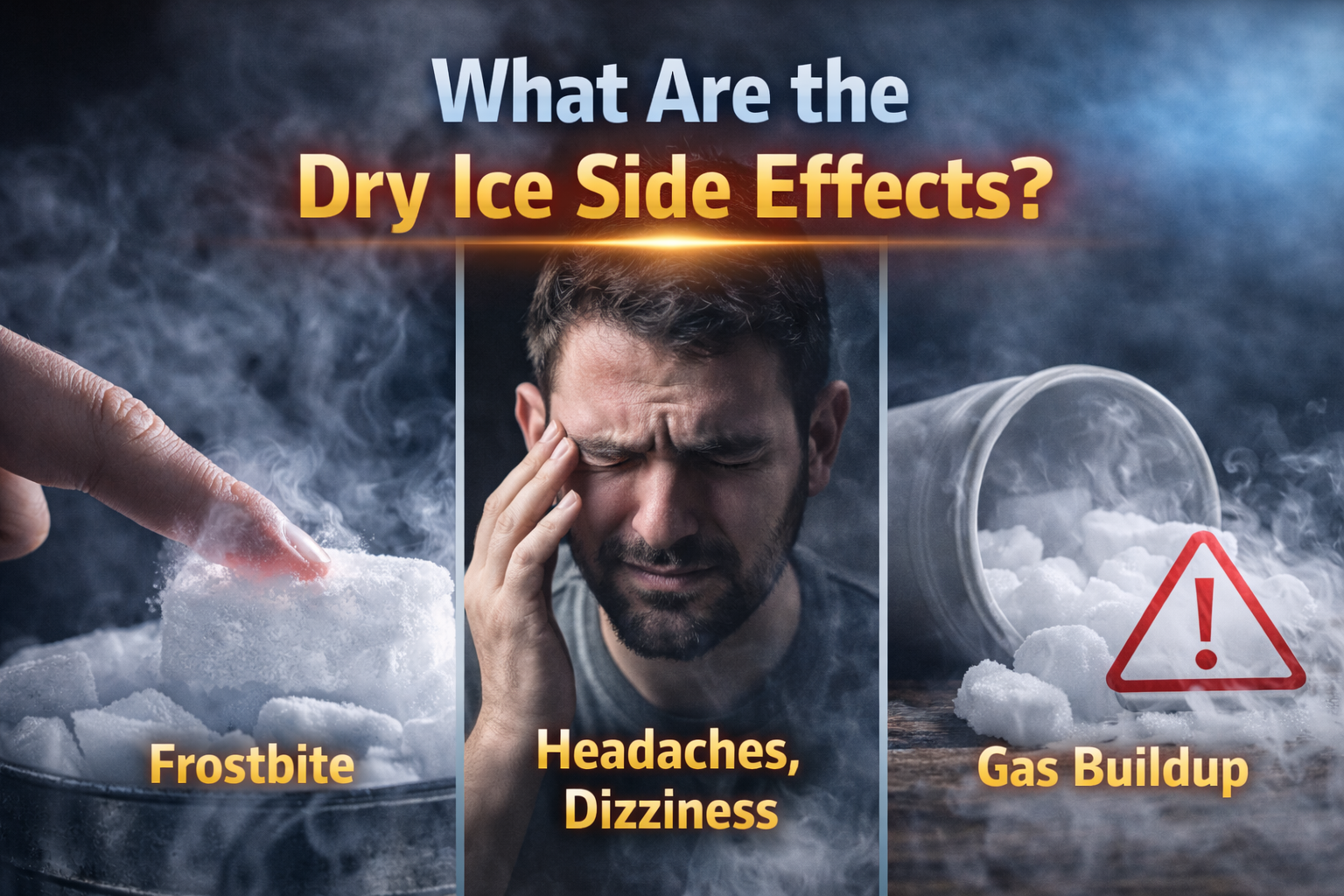
Understanding dry ice side effects is important for anyone working with this material. The most common side effect is frost injury caused by direct skin contact. The skin may become pale, numb, or develop blisters.
Another side effect occurs when carbon dioxide gas accumulates in closed environments. Breathing air with high carbon dioxide levels may cause headaches, dizziness, or breathing discomfort. People who work in poorly ventilated areas with dry ice should be especially careful because gas buildup can occur gradually without warning.
What Are 5 Uses of Dry Ice?
Many industries rely on dry ice because of its powerful cooling and cleaning properties. One of the most common uses is shipping frozen foods. Dry ice keeps products cold during transport without leaving moisture. Medical storage is another important use. Hospitals and laboratories store sensitive materials at low temperatures using dry ice.
Special effects industries use dry ice to produce dramatic fog for stage performances and film scenes. Industrial cleaning methods also use dry ice particles to remove grease and contaminants from equipment. Outdoor travelers sometimes use dry ice in coolers to preserve food for several days during long trips.
What Is Dry Ice Safety and Why Is It Important?
Dry ice Safety practices are essential to prevent accidents. Protective gloves should always be worn when handling dry ice. Direct contact with bare skin must be avoided. Dry ice should always be used in areas with good airflow. This prevents carbon dioxide gas from accumulating in the air.
It is also important to avoid sealing dry ice inside containers. The gas produced during sublimation needs space to escape safely. Following these precautions allows people to use dry ice safely without unnecessary risks.
What to Do If You Inhale Dry Ice Fumes?
Another important safety question is what to do if you inhale dry ice fumes. Dry ice releases carbon dioxide gas, which can affect breathing if inhaled in high concentrations. Symptoms may include dizziness, headache, confusion, or difficulty breathing.
If someone experiences these symptoms, they should immediately move to an area with fresh air. Fresh air helps restore normal oxygen levels in the body. If breathing problems continue, medical assistance should be sought as soon as possible.

FAQs
What will happen if you touch dry ice?
If you touch dry ice with bare skin, it can freeze the skin very quickly because its temperature is extremely low. This may cause frost injury that looks similar to a burn and can damage skin tissue within seconds.
Is dry ice dangerous for humans?
Dry ice can be dangerous for humans if it is handled without safety precautions. Direct skin contact can cause frost injury, and breathing high levels of carbon dioxide gas released from dry ice in a closed area can cause dizziness or breathing problems.
Is dry ice considered hazardous?
Yes, dry ice is considered a hazardous material in many transport and safety regulations because it releases carbon dioxide gas and has an extremely low temperature. It must be handled, stored, and transported carefully to avoid accidents.
What to do if you get dry ice on your skin?
If dry ice touches your skin, remove it immediately and move away from the source. Warm the affected area slowly using lukewarm water and avoid rubbing the skin. If pain, blistering, or numbness continues, you should seek medical attention.
Is dry ice harmful for skin?
Yes, dry ice can be harmful for skin because its temperature can freeze skin cells instantly. Prolonged contact may cause frost injury, blisters, and tissue damage.
Do I need gloves to handle dry ice?
Yes, wearing thick insulated gloves is strongly recommended when handling dry ice. Gloves create a protective barrier that prevents direct contact and reduces the risk of frost injury.
Conclusion
Dry ice dangerous to touch is an important safety warning that many people underestimate. Because dry ice temperature reaches nearly -78 degrees Celsius, it can freeze skin within seconds and cause painful frostbite injuries.
Despite these risks, dry ice remains extremely valuable in industries such as food transportation, medicine, laboratory research, and entertainment effects. The key to safe use is understanding its properties and following proper dry ice safety practices.
When people wear protective gloves, ensure proper ventilation, and avoid sealing dry ice in containers, they can use it safely and effectively. Knowing why dry ice dangerous to touch helps prevent accidents and allows people to benefit from its powerful cooling abilities while staying safe.
Read More:
What is Dry Ice and Why It Matters in Saudi Arabia
What Is Dry Ice Used For in the Modern World of Industrial Gas and Advanced Cooling
Best Dry Ice Blasting Saudi Arabia: Eco Friendly and Efficient Cleaning Solutions
Dry Ice Dangers You Cannot Ignore: Hidden Health Risks and Safe Handling Truths