

Summarize This Post With
- This Page Covers :
-
What Is Dry Ice Chemical Formula?
-
What Is the Chemical Formula of Dry Ice, and How Is It Different From Regular Ice?
-
Why Is the Dry Ice Chemical Formula Important in Real Life?
-
How Is Dry Ice Made From Carbon Dioxide?
-
What Is Dry Ice Chemical Formula and Why Does It Create Fog?
-
Is Dry Ice Dangerous Because of Its Chemical Formula?
-
Where Is Dry Ice Commonly Used Today?
-
What Is the Chemical Formula of Dry Ice Compared to Liquid Carbon Dioxide?
-
How Does the Chemical Formula Affect Storage and Handling?
-
Can Dry Ice React With Other Substances?
-
Why Do People Search for the Dry Ice Chemical Formula Before Buying It?
-
What Safety Measures Should You Follow When Using Dry Ice?
-
FAQs
-
What is the chemical of dry ice?
-
Is dry ice nitrogen?
-
Is dry ice still H2O?
-
Is dry ice just CO2?
-
Why is CO2 called dry ice?
-
Which chemical is used for ice?
-
Conclusion: Why Dry Ice Chemical Formula Is Important to Know
Have you ever seen thick white fog coming out of a box at a wedding event or science lab and wondered what creates that dramatic effect? Many people feel curious about dry ice but hesitate to use it because they do not fully know what it contains or whether it is safe. Some worry about health risks.
Others search online but find confusing scientific explanations that do not feel practical. This article solves that problem in simple and clear language. You will learn the dry ice chemical formula, what it means, why it matters, and how it affects real world use.
We will also answer common questions people ask before buying or handling dry ice. By the end of this guide, you will feel confident about what dry ice is, how it behaves, and how to use it responsibly.
What Is Dry Ice Chemical Formula?
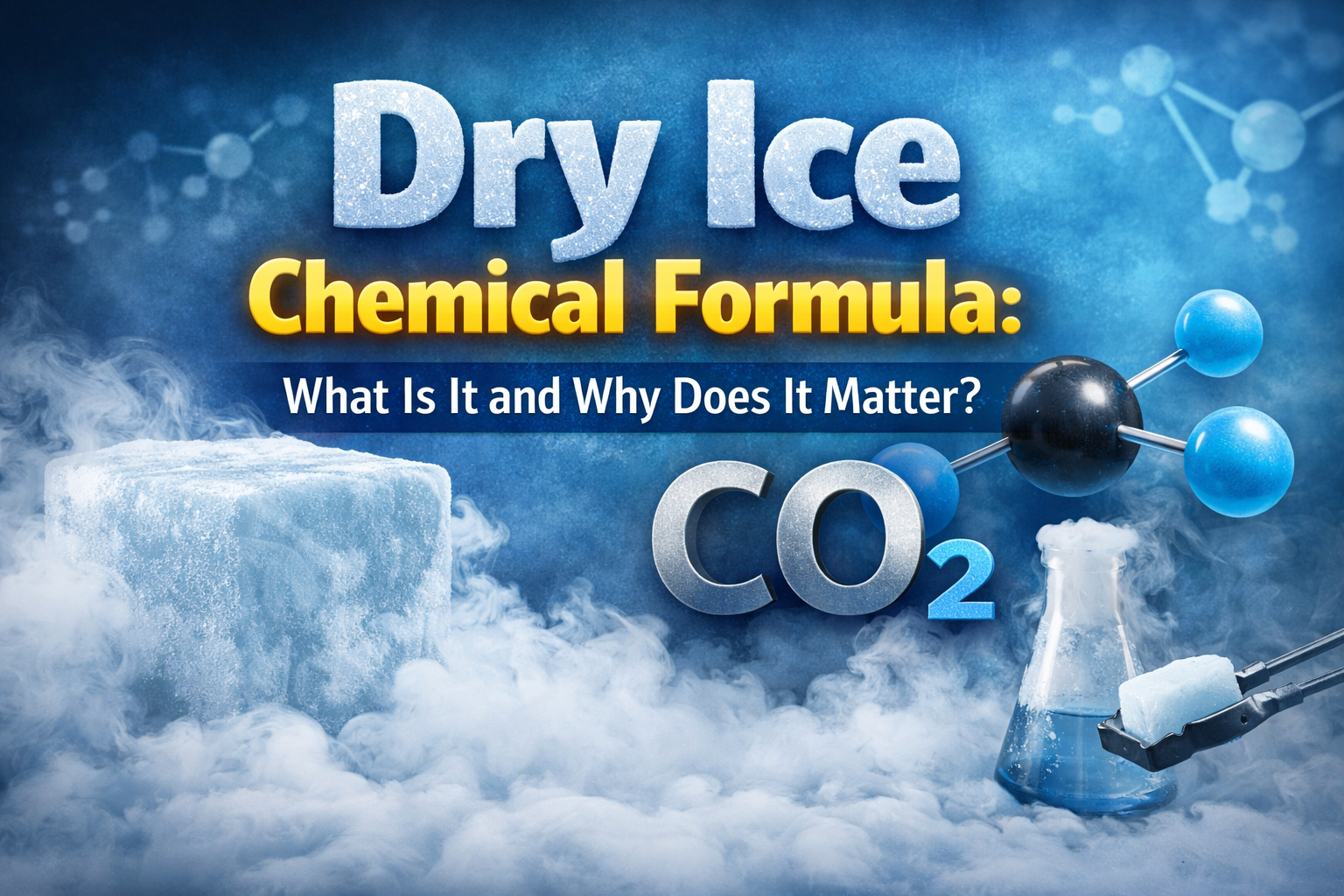
The dry ice chemical formula is CO2. This means dry ice is made from carbon dioxide. Unlike the carbon dioxide gas that we breathe out, dry ice is carbon dioxide in solid form. Instead of melting into a liquid when it warms, it turns directly into a gas. This process is called sublimation.
Many people search for the dry ice chemical formula because they want to know whether it is dangerous or artificial. The truth is simple. Dry ice is not a complex chemical mixture. It is pure carbon dioxide that has been frozen at a very low temperature.
Carbon dioxide becomes solid at minus 78.5 degrees Celsius. At this temperature, it forms dry ice blocks or pellets. When people ask about the chemical formula of dry ice, they are simply asking what substance it contains. The answer remains CO2.
What Is the Chemical Formula of Dry Ice, and How Is It Different From Regular Ice?
When someone types what is the chemical formula of dry ice into a search engine, they often compare it with regular ice. Regular ice is frozen water. Its chemical formula is H2O. That means it contains hydrogen and oxygen. It melts into liquid water when heated.
Dry ice is completely different. The chemical formula for dry ice is CO2, which contains one carbon atom and two oxygen atoms. Instead of melting, it turns directly into a gas. This difference explains why dry ice creates fog and does not leave any liquid behind. Because it skips the liquid stage, it stays dry. That is why it is called dry ice.
Why Is the Dry Ice Chemical Formula Important in Real Life?
The dry ice chemical formula matters because it tells us how the substance behaves. Since dry ice is solid carbon dioxide, it has specific properties that make it useful. First, it is extremely cold. This makes it perfect for preserving food during transport. Medical industries use it to keep vaccines and biological samples at safe temperatures.
Second, because it sublimates, it does not leave moisture. This is important when keeping electronics or delicate equipment dry.
Third, carbon dioxide gas can displace oxygen in enclosed areas. That is why safety rules are important. The chemical nature of dry ice explains why ventilation is necessary. Knowing the dry ice chemical formula helps users make safe decisions.

How Is Dry Ice Made From Carbon Dioxide?
Dry ice production starts with carbon dioxide gas. Manufacturers compress and cool the gas until it becomes liquid. Then they reduce the pressure quickly. This causes the liquid carbon dioxide to turn into snow like solid particles. These particles are pressed into blocks or pellets.
The chemical structure does not change during this process. It remains CO2. This confirms again that the dry ice chemical formula is simply carbon dioxide in solid form.
Because it is made from recycled industrial carbon dioxide in many cases, it does not create new carbon emissions. However, it still releases carbon dioxide gas when it sublimates, so careful handling is required in closed spaces.
What Is Dry Ice Chemical Formula and Why Does It Create Fog?
People often wonder why dry ice creates dramatic fog effects at parties and stage shows. When dry ice is placed in warm water, it sublimates faster. The cold carbon dioxide gas cools the surrounding air. This causes water vapor in the air to condense into tiny droplets. These droplets appear as thick white fog.
The fog is not smoke. It is condensed water vapor mixed with carbon dioxide gas. The reason behind this effect lies in the dry ice chemical formula. Because it is CO2, it reacts physically with temperature changes rather than chemically burning or producing flames.
Is Dry Ice Dangerous Because of Its Chemical Formula?
The chemical formula of dry ice might look simple, but safety still matters. Carbon dioxide is not poisonous in small amounts. We naturally breathe it out. However, high concentrations can reduce oxygen levels in enclosed spaces. This may cause dizziness or breathing difficulty.
Dry ice is also extremely cold. Direct contact can cause skin burns similar to frostbite. These risks are not because of toxic chemicals. They come from the properties of solid carbon dioxide. That is why ventilation and protective gloves are always recommended.
Understanding the chemical formula for dry ice helps users recognize that the main risk is cold temperature and gas buildup, not chemical contamination.

Where Is Dry Ice Commonly Used Today?
The dry ice chemical formula gives it unique properties that support many industries. Food transport companies use it to keep frozen products fresh during long shipments. Hospitals use it to store medical samples. Laboratories use it for experiments that require low temperatures.
Entertainment industries use it to create fog effects. Cleaning industries use dry ice blasting to remove dirt from machinery without water. In each case, the reason for its usefulness connects directly to its chemical nature. Solid carbon dioxide provides intense cooling and leaves no liquid residue.
What Is the Chemical Formula of Dry Ice Compared to Liquid Carbon Dioxide?
Many people ask whether dry ice and liquid carbon dioxide have different formulas. The answer is no. The formula remains CO2. The only difference is the physical state.
Solid carbon dioxide is dry ice. Liquid carbon dioxide forms under high pressure. Gas carbon dioxide exists at normal room conditions. The chemical identity remains the same. This consistency explains why the dry ice chemical formula does not change across states.
How Does the Chemical Formula Affect Storage and Handling?
Because the dry ice chemical formula is CO2, it constantly sublimates at room temperature. This means it slowly turns into gas even when stored in insulated containers. It should never be stored in airtight containers. Gas pressure can build up and cause containers to burst.
Proper storage includes insulated coolers that allow gas to escape safely. Good airflow in storage areas prevents carbon dioxide buildup. The chemical properties directly influence these safety guidelines.
Can Dry Ice React With Other Substances?
Dry ice is chemically stable under normal conditions. It does not easily react with most materials. However, placing dry ice in sealed bottles can create pressure buildup due to gas expansion. This can cause explosions.
When added to water, it increases the acidity slightly because carbon dioxide forms carbonic acid in water. This reaction is mild but explains why beverages become fizzy when carbon dioxide dissolves in them. These reactions come directly from the nature of CO2.
Why Do People Search for the Dry Ice Chemical Formula Before Buying It?
Many buyers search for what is the chemical formula of dry ice because they want reassurance about safety and purity. They want to confirm that it is not made from artificial additives. They also want to know whether it is safe around food.
The answer remains simple. The dry ice chemical formula is pure carbon dioxide. When used properly, it is widely accepted for food preservation and transportation. Trust grows when people learn the science behind it.
What Safety Measures Should You Follow When Using Dry Ice?
Safety starts with knowledge of the dry ice chemical formula. Because it is solid carbon dioxide, always use gloves when handling it. Avoid touching it directly. Ensure proper ventilation. Never place it in sealed containers.
Keep it away from children and pets. Store it in insulated containers, but not airtight ones. These precautions are practical and easy to follow.

FAQs
What is the chemical of dry ice?
The chemical of dry ice is carbon dioxide. Its chemical formula is CO2, which means it contains one carbon atom and two oxygen atoms.
Is dry ice nitrogen?
No, dry ice is not nitrogen. Dry ice is solid carbon dioxide. Nitrogen in solid form is called liquid nitrogen when cooled, and it is completely different from dry ice.
Is dry ice still H2O?
No, dry ice is not H2O. H2O is the chemical formula for water. Regular ice is frozen water, but dry ice is frozen carbon dioxide.
Is dry ice just CO2?
Yes, dry ice is pure CO2 in solid form. It does not contain water or any other chemical substances.
Why is CO2 called dry ice?
CO2 is called dry ice because it changes directly from solid to gas without becoming liquid. It does not melt into water, so it stays dry instead of wet like regular ice.
Which chemical is used for ice?
Regular ice is made from water, which has the chemical formula H2O. Dry ice, on the other hand, is made from carbon dioxide, which has the chemical formula CO2.
Conclusion: Why Dry Ice Chemical Formula Is Important to Know
The dry ice chemical formula is CO2, which means it is solid carbon dioxide. This simple scientific fact explains everything about its behavior, from extreme cold temperature to fog creation and safe handling rules.
When you understand what the dry ice chemical formula means, you remove confusion and fear. You gain clarity about how it works, why it sublimates, and how to use it safely in food transport, medical storage, entertainment, and industrial cleaning.
Knowledge builds confidence. Instead of guessing or relying on myths, you now know that dry ice is pure carbon dioxide in solid form. Use it responsibly, store it safely, and always ensure proper ventilation. Science becomes simple when explained clearly.
Read More:
What is Dry Ice and Why It Matters in Saudi Arabia
What Is Dry Ice Used For in the Modern World of Industrial Gas and Advanced Cooling
Best Dry Ice Blasting Saudi Arabia: Eco Friendly and Efficient Cleaning Solutions
Dry Ice Dangers You Cannot Ignore: Hidden Health Risks and Safe Handling Truths