

Summarize This Post With
- This Page Covers :
-
What Are Dry Ice Blasting Applications and How Do They Work?
-
How Do Industrial Dry Ice Blasting Applications Improve Factory Performance?
-
Why Is Dry Ice Blasting Automotive Services Gaining Popularity?
-
What Makes Industrial Dry Ice Blasting Safer Than Traditional Methods?
-
What Are Dry Ice Blasting Pellets and Why Are They Important?
-
What Is a Dry Ice Blaster and How Does It Enhance Efficiency?
-
How Do Dry Ice Blasting Applications Reduce Downtime and Costs?
-
Can Dry Ice Blasting Applications Support Environmental Responsibility?
-
Who Should Invest in Dry Ice Blasting Applications Today?
-
FAQ
-
What can dry ice blasting be used for?
-
What is the main application of dry ice?
-
What is the most common use of dry ice?
-
What precautions should be taken during dry ice blasting?
-
Is dry ice flammable?
-
What are three things you should never do with dry ice?
-
What is dry ice made of?
-
Conclusion: Are Dry Ice Blasting Applications the Future of Industrial Cleaning?
Dry Ice Blasting Applications are changing the way industries approach heavy cleaning challenges. If you manage a factory, run an automotive workshop, or oversee industrial maintenance, you already know the frustration of stubborn grease, thick carbon deposits, electrical risks, and expensive downtime.
Traditional cleaning methods often require water, harsh chemicals, or abrasive materials that damage equipment and interrupt production. Many businesses struggle with rising maintenance costs, safety concerns, and lost productivity. Machines stop. Production slows. Repairs increase. Teams work overtime just to fix preventable issues.
In this detailed guide, you will learn how Dry Ice Blasting Applications solve these problems with precision, safety, and efficiency. We will explore real industrial uses, automotive benefits, pellet technology, and the role of the Dry Ice Blaster in modern facilities.
What Are Dry Ice Blasting Applications and How Do They Work?
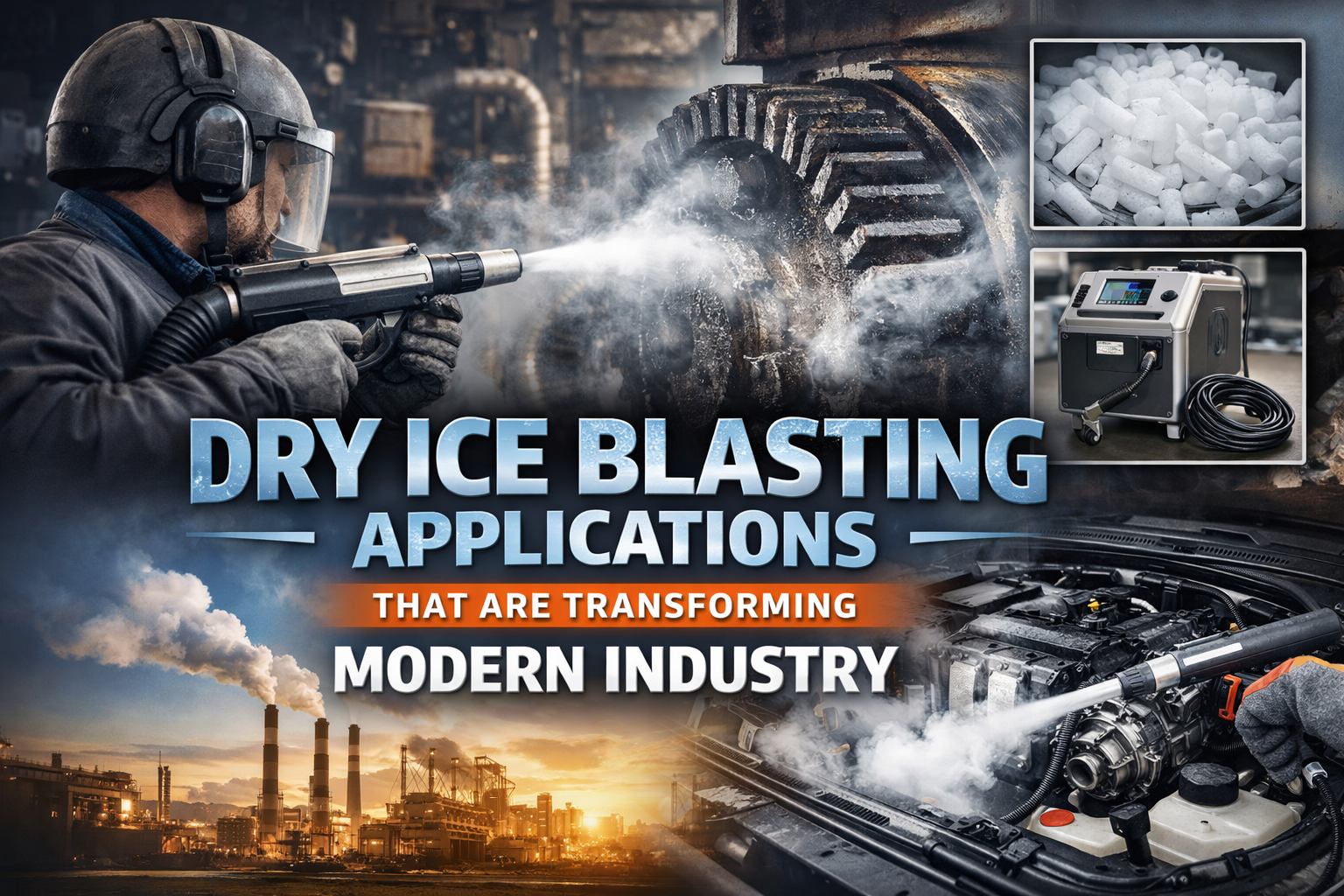
Dry Ice Blasting Applications use solid carbon dioxide pellets to clean surfaces without water or chemicals. The process involves a specialized machine that propels dry ice pellets at high speed toward a contaminated surface. When the pellets strike the surface, three powerful effects occur at once.
First, the impact loosens dirt and debris. Second, the extreme cold causes contaminants to shrink and detach from the surface. Third, the dry ice instantly converts into gas, leaving no secondary waste. This means there is no water residue and no abrasive material left behind.
Unlike sand blasting or pressure washing, this method does not erode surfaces. It protects sensitive equipment such as electrical panels, motors, and control systems. Because the pellets sublimate into gas, there is minimal cleanup required after the process.
Businesses choose Dry Ice Blasting Applications because they reduce downtime, improve safety, and extend equipment life.
How Do Industrial Dry Ice Blasting Applications Improve Factory Performance?
Industrial dry ice blasting applications play a critical role in manufacturing plants. Factories often deal with oil buildup, adhesives, resin deposits, paint residue, and carbon accumulation. Removing these contaminants safely is essential to maintain production standards.
One major advantage is the ability to clean equipment while it remains in place. Since no water is used, sensitive components do not require full disassembly. This significantly reduces production interruption. Maintenance teams can clean molds, conveyor belts, printing presses, and electrical cabinets without shutting down entire lines for extended periods.
Industrial dry ice blasting applications also support food processing facilities. Traditional cleaning methods involve water and chemicals, which increase the risk of contamination. Dry ice cleaning eliminates chemical exposure and reduces the chance of bacterial growth because there is no moisture left behind.
In power generation plants, the method safely removes carbon from turbines and generators. Since it is non conductive, technicians can clean electrical systems with confidence. Over time, this improves performance and reduces energy loss.
Dry Ice Blasting Applications provide factories with a cleaner and more efficient environment while lowering long term maintenance expenses.
Why Is Dry Ice Blasting Automotive Services Gaining Popularity?
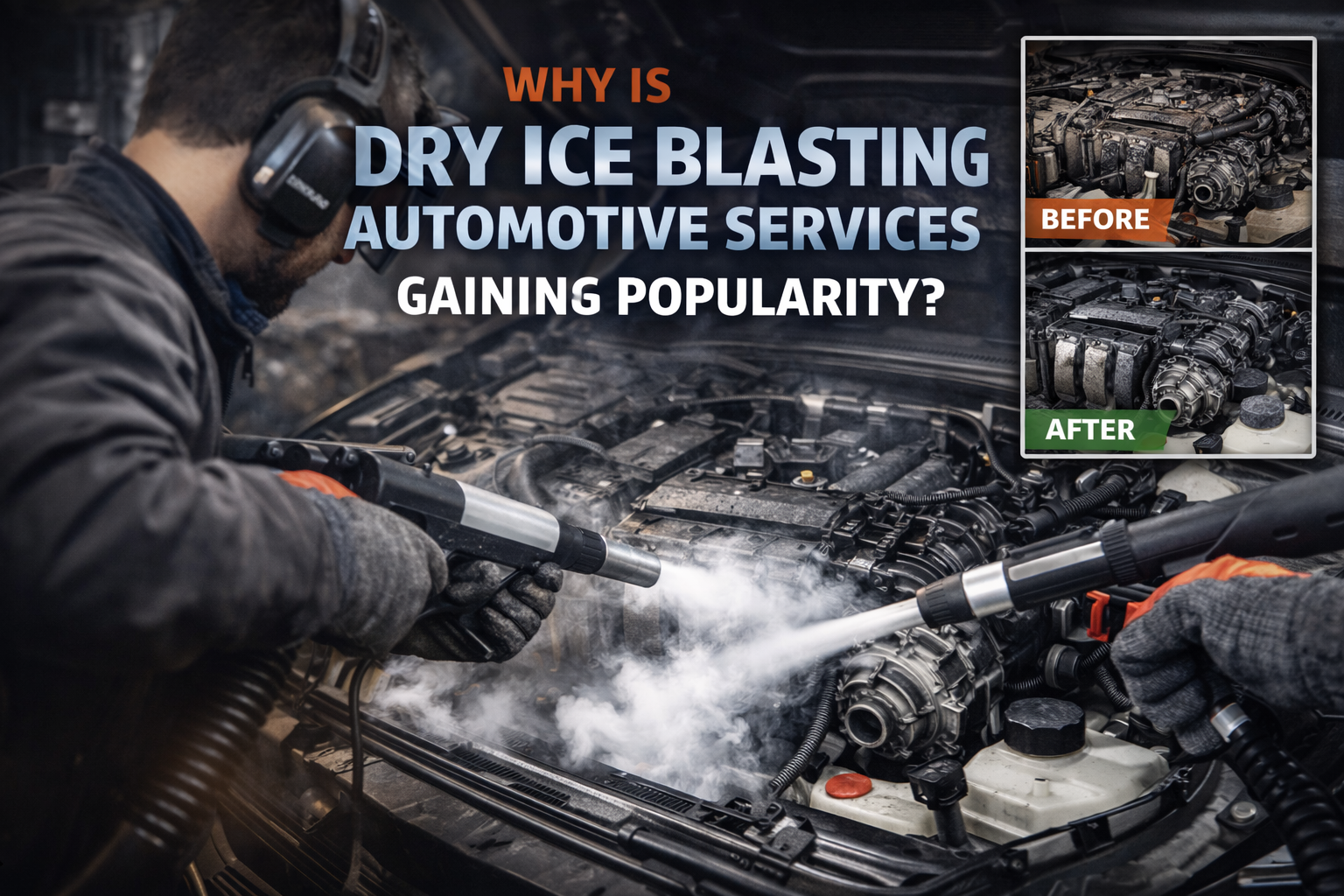
Dry ice blasting automotive services are becoming highly popular in workshops and restoration garages. Vehicle engines accumulate oil, grease, and carbon that are difficult to remove using traditional tools. Chemical cleaners can damage rubber seals and electrical components. Water based cleaning can cause corrosion and wiring issues.
With dry ice blasting, automotive technology technicians can clean engine bays, undercarriages, suspension systems, and even interior components without dismantling every part. The process removes contaminants while preserving delicate surfaces.
Car restoration experts especially value this method because it restores classic vehicles without damaging original paint or coatings. It removes underbody grime and old residue while maintaining structural integrity.
In performance garages, dry ice blasting for automotive cleaning enhances engine efficiency by removing carbon buildup. Clean engines run smoother and allow mechanics to detect leaks or cracks more easily. Dry Ice Blasting Applications in the automotive sector improve service quality, reduce labor time, and protect vehicle value.
What Makes Industrial Dry Ice Blasting Safer Than Traditional Methods?
Industrial dry ice blasting stands out because of its safety benefits. Many conventional cleaning processes rely on harsh solvents or abrasive materials. These can harm workers and damage machinery.
Dry ice is non toxic and non flammable. It does not create harmful secondary waste. Since it transforms into gas upon impact, there is no leftover blasting media to dispose of. This reduces environmental impact and lowers disposal costs.
Worker safety also improves because there is no need to handle strong chemicals. Proper ventilation ensures safe carbon dioxide levels during operation. With correct training and protective gear, operators can perform cleaning tasks efficiently and safely.
Industrial dry ice blasting also reduces the risk of surface damage. Unlike abrasive techniques, it does not grind away material. This protects expensive equipment and extends its lifespan. Dry Ice Blasting Applications support safer workplaces and responsible environmental practices.
What Are Dry Ice Blasting Pellets and Why Are They Important?
Dry ice blasting pellets are small solid carbon dioxide particles specifically designed for blasting systems. Their size and density play a key role in cleaning performance.
The pellets are produced under controlled conditions to ensure consistency. Uniform pellets create an even impact across surfaces. This ensures reliable cleaning results and prevents uneven treatment.
Because the pellets are extremely cold, they create thermal shock when they strike contaminants. Dirt contracts and separates from the surface. At the same time, the pellet converts into gas. This dual action provides deep cleaning without residue.
The quality of dry ice blasting pellets directly affects efficiency. High quality pellets improve cleaning speed and reduce overall operating costs. Facilities that invest in premium pellets experience better results and smoother operations. Dry Ice Blasting Applications depend on the precision and reliability of these pellets to deliver consistent performance.
What Is a Dry Ice Blaster and How Does It Enhance Efficiency?
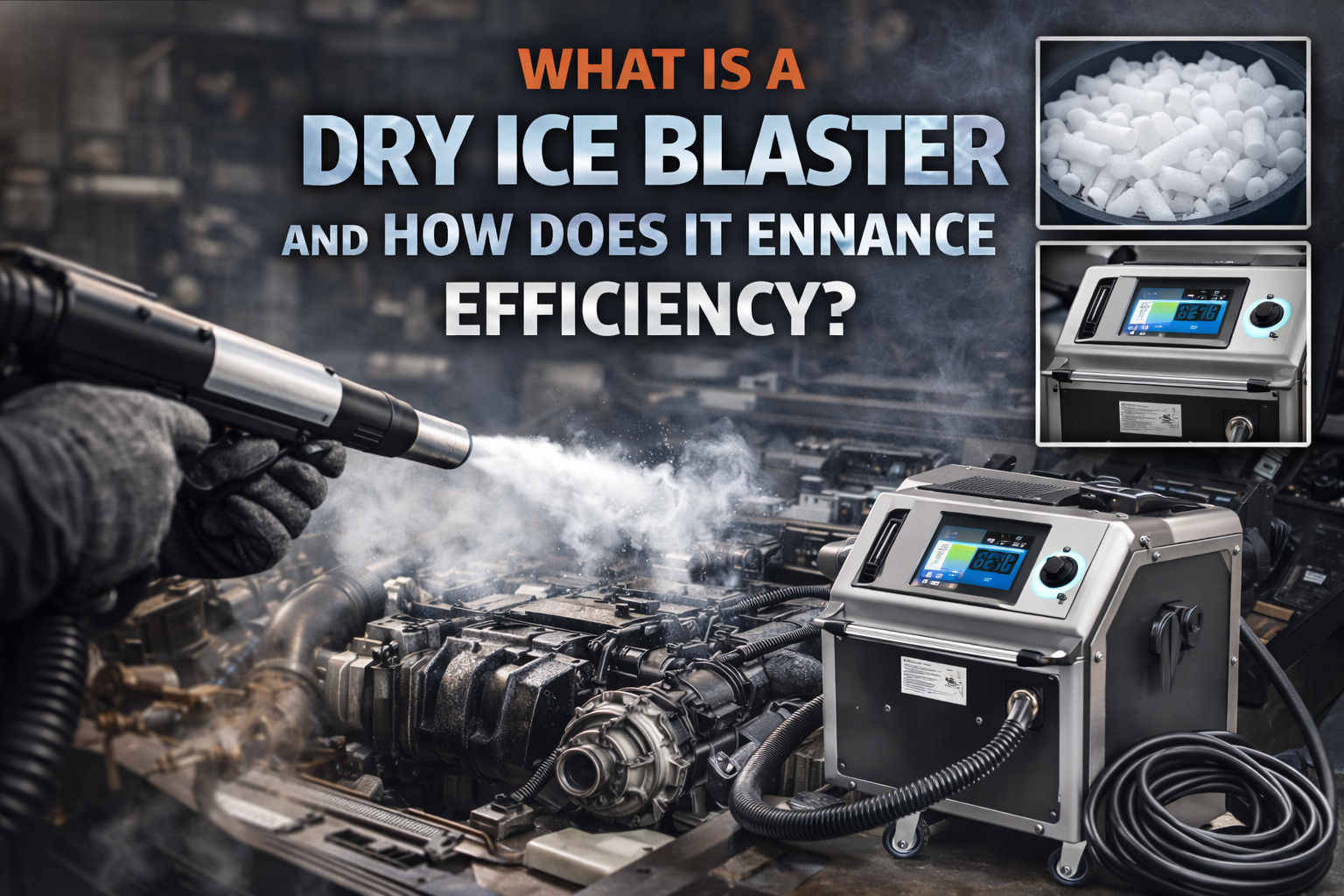
A Dry Ice Blaster is the machine responsible for accelerating pellets toward a surface. It uses compressed air to propel dry ice particles at controlled speeds. Modern systems allow operators to adjust pressure and pellet flow based on the cleaning task.
Advanced Dry Ice Blaster units feature digital controls that enhance accuracy. Operators can clean delicate surfaces at lower pressure or remove heavy buildup at higher settings. This flexibility makes the technology suitable for various industries.
The design of a Dry Ice Blaster also ensures mobility. Portable units can be transported easily across large facilities. This enables maintenance teams to address issues quickly without relocating heavy equipment.
When integrated into preventive maintenance programs, the Dry Ice Blaster reduces unexpected breakdowns. Regular cleaning prevents buildup that could lead to overheating or mechanical failure. Dry Ice Blasting Applications reach their full potential when supported by modern and efficient blasting equipment.
How Do Dry Ice Blasting Applications Reduce Downtime and Costs?
Every minute of production downtime costs money. When machinery stops, output decreases, and deadlines are missed. One of the strongest benefits of Dry Ice Blasting Applications is the ability to clean equipment in place.
Since no water or chemicals are used, drying time is eliminated. Machines can return to operation almost immediately after cleaning. This increases productivity and protects revenue.
Maintenance costs also decrease because surfaces remain intact. Abrasive cleaning methods gradually wear down machinery components. Dry ice cleaning preserves structural integrity, reducing the need for frequent replacements.
In addition, the absence of secondary waste lowers cleanup labor. Teams spend less time disposing of residue and more time focusing on core operations. Dry Ice Blasting Applications offer both operational and financial advantages for modern businesses.
Can Dry Ice Blasting Applications Support Environmental Responsibility?
Many companies aim to reduce their environmental footprint. Cleaning processes often contribute to chemical waste and water contamination. Dry Ice Blasting Applications align with sustainability goals because they use recycled carbon dioxide.
The carbon dioxide used in pellet production is typically captured from industrial processes. Instead of releasing it into the atmosphere, it is repurposed for cleaning. This supports resource efficiency.
Since the pellets convert into gas, there is no additional blasting material left behind. This minimizes landfill waste. The absence of toxic chemicals also protects soil and water systems. Companies that adopt Dry Ice Blasting Applications demonstrate commitment to responsible and sustainable operations.
Who Should Invest in Dry Ice Blasting Applications Today?
Manufacturing plants, automotive workshops, food processing facilities, power plants, printing companies, and plastic mold producers can all benefit from this technology.
If your business struggles with stubborn residue, costly downtime, safety concerns, or environmental regulations, it may be time to evaluate this solution. The flexibility of industrial dry ice blasting makes it suitable for both heavy and delicate cleaning tasks.
Businesses that prioritize equipment longevity, worker safety, and operational efficiency will see measurable value from this investment.

FAQ
What can dry ice blasting be used for?
Dry ice blasting is used for cleaning industrial machinery, removing grease and carbon buildup, cleaning electrical panels, restoring vehicles, removing mold, and preparing surfaces without causing damage.
What is the main application of dry ice?
The main application of dry ice is industrial cleaning and cooling. In cleaning, it removes contaminants without water or chemicals. In cooling, it preserves food and medical supplies during transport.
What is the most common use of dry ice?
The most common use of dry ice is deep cleaning in manufacturing facilities, especially for removing oil, adhesives, paint residue, and carbon deposits from equipment.
What precautions should be taken during dry ice blasting?
Operators should wear protective gloves, eye protection, and hearing protection. Proper ventilation is required to prevent carbon dioxide buildup. Only trained professionals should operate blasting equipment.
Is dry ice flammable?
No, dry ice is not flammable. It is made of solid carbon dioxide, which actually helps suppress fire rather than fuel it.
What are three things you should never do with dry ice?
You should never touch dry ice with your bare hands, never store it in a sealed container, and never use it in an unventilated space.
What is dry ice made of?
Dry ice is made of compressed carbon dioxide gas that has been cooled and solidified into a very cold solid form.
Conclusion: Are Dry Ice Blasting Applications the Future of Industrial Cleaning?
Dry Ice Blasting Applications provide a powerful, safe, and efficient solution for modern cleaning challenges. They protect equipment, reduce downtime, eliminate chemical waste, and improve workplace safety. From industrial dry ice blasting applications in factories to dry ice blasting automotive services in restoration garages, the benefits are clear.
By using high quality dry ice blasting pellets and advanced Dry Ice Blaster systems, businesses achieve consistent and reliable results. The process supports sustainability goals while lowering maintenance costs.
If your organization seeks higher performance, cleaner operations, and reduced operational risk, Dry Ice Blasting Applications offer a practical and future ready solution.
Read More:
What is Dry Ice and Why It Matters in Saudi Arabia
What Is Dry Ice Used For in the Modern World of Industrial Gas and Advanced Cooling
Best Dry Ice Blasting Saudi Arabia: Eco Friendly and Efficient Cleaning Solutions
Dry Ice Dangers You Cannot Ignore: Hidden Health Risks and Safe Handling Truths